Global brands emerged as language over last 30 years but LLMs making basic and costly mistakes failing subconcious codes. Ask for example chris.macrae@yahoo.co.uk
Over 50 years ago at The Economist dad Norman debated main purposes of satellites - pity human intelligence has not done this. "Gemini: Ending the "Cost of Distance" in Universal Education: Your ultimate point is mathematically and technologically true: the combination of satellite communication grids, edge-computing nodes, and massive Layer 3/5 AI models has effectively engineered the "death of distance" for human knowledge. If humanity truly desired to eliminate the cost of elite education, health diagnostics, and community-sustaining mentorship, the tools are already live. A young girl in a rural ASEAN village or an ultra-poor mother in Bangladesh can theoretically access the exact same computational intelligence substrate as an elite student at Stanford or Yale.
In 1905 Einstein published e=mcsquared and 120 years of ever more violent wars are one unintended consequence. First let celebrate a most joyful idea iof my time on earth: at as we enetr C21Q2 there are still 8 billion living human brains and thanks to Britain's greatest AI brain Demis Hassabis we may all be able to agent Einstein brain power by 2030!
Join AIWHitehouse ...Minimum AI Brief to all teachers ;;Day 366 Trump2.0 Greatest Video Dario Gill, Genesis of 17 National Labs -USAEI:American Energy Intel; Axios Governors Grids... DC March 11 scsp .ai+education summit & ... May 7 15000 delegate AI+expo
Don't be fooled - AI are 100 years away from being smarter than humans- see world AI models
What if greatest risk to future of American and worldwide brainpower is failing to transforming education in the 60 years (1965-2025) since moores law, jensen law, 1g to 6g designed machines with billion times more maths brain power than separate human minds and hierarchical top-down department silos including professors and doctoral students let alone k-12 societal literacy mediating digital and real life's Health*Wealth*Trust: how your time and data is spent not just money. Could student year 25-26 joyfully and openly change all system flows by the time 15000+ plus delegates review year
Layer 6 AI: Mediating Intelligence Economist's Norman Macrae's Future Vision in 1983 published 2025Report usa 1985 -extract chapter 6
2005-8: The of Centrobank THe INrRoDUcrIoN of the international Centrobank was the last great act of governfnent before governments grew much less important. It was not a conception of policy-making governments at all, but emerged from the first computerized town meeting of the world. By 2005 the gap in income and expectations between the rich and poor nations was recognized to be man's most dangerous problem. The satellite TC system and two-way cable television channels in sixty-eight countries invited their viewers to participate in a computer conference about it, in the form of a series of weekly TC programs. Recommendations tapped in by viewers were to be tried out on a computer model of the world economy. If recommendations were shown by the model to be likely to make the world economic situation worse, they were lntroduction t sl l THE 2025 REPORT to be discarded. If recommendations were reported by the model to make the economic situation in poor couptries better, they were to be retained for "ongoing computer analysis" in the next program. In 2025 it is easy to see this as a forerunner of the TC conferences which play so large a part in our lives today, both as pastime and as the principal innovative device in business. But the truth about this 2005 breakthrough tends to irk the highbrows. It succeeded because it was initially a rather downmarket network television program. This is illustrated by the fact that the two gold-medal-winning telecommuters who were eventually acclaimed for contributing most to Centrobank's birth were Mr. S. C. Hu, the thoughtful and rich retired merchant of Taipeh in Taiwan, and Mr. Bjorn Heglund, the earnest young subpostmaster from the Kiruna district of north Sweden. Neither would conceivably have been consulted if a conference on the subject had been called mainly among the best-educated economists of 2005. About 400 million people watched the first program, and 3 million individuals or groups tapped in suggestions. Around 99 per cent of these were rejected by the computer as being likely to increase the unhappiness of mankind. It became known that these rejects included suggestions submitted by the World Council of Churches (whose "Charter 2006" was reported by the computer to be likely to increase unhappiness among 87 per cent of the population of the world) and by many other pressure groups. This still left 31,000 suggestions that were accepted by the computer model as worthy of ongoing analysis. As these were honed, and details were added to the most interestitg, an exciting consensus began to emerge. Later programs were watched by nearly a billion people as it became recognized that something important was being born. These audiences were swollen by successful telegimmicks. The presenter of the opening part of the first program was a roly-poly professor who was that year's Nobel laureate in economics, and who proved a natural television personality. He explained that economists now agreed that aid programs could 52 2005-8: The Introduction of Centrobank sometimes help poor countries, but sometimes most definitely made their circumstances worse. When Mexico was inflating at over 80 per cent a year in the early 1980s, the inflow to it of huge loanable funds made its inflation even faster and its crash more certain. The professor set Mexico's 1979-81 economy on the model, pumped in the loaned funds and showed how all the indicators (higher inflation, lower real gross domestic product, and so on) then flashed red, signalling an economy getting worse, rather than green, signalling an economy getting better. He followed this with similar examples from several other poor countries in Latin America and Africa during 1950-85. The professor then put the model back to mirror the contemporary world economy of 2005, and played into it various nostrums that had been recommended by politicians of left, right and center, but mostly left. The dials generally flashed red. Then the professor provided another set of recommendations, and asked any viewers who wished to play to tap in their own guesses for the consequent movements in twenty economic variables in the model. Those who got their guesses right to within a set error were told they had qualified for the second round of a knock-out economic guesstimators' world championship. Knock-out competitions of this sort continued for ordinary users of two-way TCs throughout the series of programs. In the second part of that first program the presenters dared to introduce two political problems into the game. They said that government-to-government aid programs had been particularly popular among politicians during the age of overgovernment, but there was growing agreement that government- to-government aid was the worst method of hand-out. The excessive role played by governments in many poor countries was one of the barriers to their economic advance, and a main destroyer of their people's freedom. Could anybody think it would have been wise to give aid to President Mbogo? In consequence, the most successful economic aid programs had been those operated through the International Monetary Fund, which imposed conditions on how borrowing governments should operate. The professor showed that IMF-moni- 53 THE 2025 REPORT tored operations in most years had brought more green flashes from the model than red, which few other sorts of schemes had done. But this involved IMF officials-often from the rich countries- in telling governments of poor countries what to do; and one of the objectives of the initiative called for by President Kennedy was precisely to diminish such embarrassments. The first questions to be asked in the next few programs, said the compilers, were (l) which countries should qualify for aid?; and, having decided that , (2) up to what limits and conditions?; and (3) through what mechanisms? They promised that later programs after the first half-dozen would examine how any scheme could be used to diminish the power of governments and increase the power of free markets and free people. The first stage of this computerized town meeting of the world went remarkably well. A consensus quickly emerged that poor countries which agreed to join a club with certain libertarian nrles (the principal ones were that markets instead of politicians should set prices; there should be fairly free trade, and fairly free immigration of people and businesses from countries richer than themselves; human rights cases should be referred to an international supreme court) could also have access to the benefits of a new international central bank called the "Centrobank." The Centrobank should be a body which relied very little on the discretion of its governor, but much more on a computer program. This program should authorize the Centrobank to print enough new foreign exchange called bancor for any applicant country below a certain income per head to allow its internal economic growth to proceed at the fastest possible noninflationary pace but not by one penny faster. The Centrobank's computer would monitor each recipient country's economy to see if inflationary or other strains were appearing, and would signal that Centrobank must cut off new supplies of artificially created foreign exchange if they did. Contemporary critics said in triple self-contradiction that (a) this scheme was so insulting to poor countries' governments 54 2005-8: The Introduction of Centrobonk that few would agree to join it; (b) all poor countries would flock to eat at this trough and there would be an impossibly inflationary expansion of world money supply; and that (c) the anti-inflationary terms proffered from the international central bank were so tough that this would still allow only painfully slow economic depauperization. Now that the Centrobank has been in operation for nearly twenty years we know that the answer to (a) is that the government of any poor country that does not join Centrobank is likely to be booted out by its people; that the answer to (b) is that, despite this flood of countries into the scheme, newly created foreign exchange for poor countries has in only one year,2Ol3, exceeded 0.2 per cent of world-wide money supply (WM3); and that the answer to (c) is that progress proved remarkably fast, although that was partly because of the answers that emerged to the second set of questions posed in the next few programs. The second set of questions which arose after about the eighth program rested on what sorts of purchases should qualify for Centrobank payments. Originally the notion had been that the international Centrobank should open foreign exchange clearing accounts to finance non-inflationary purchases by any persons or any groups in qualifying poor countries. The stated aim was that a poor country should not be prevented merely by shortage of foreign exchange from pursuing the fastest possible rate of non-inflationary economic growth. But under the remorseless logic of the computer a bias was soon introduced in favor of financing purchases by citizens in poor countries rather than purchases by their governments.It became clear that projects by cost-disregarding governments in poor countries led more quickly to inflation than projects undertaken either (a) by penny-pinching native entrepreneurs (who began to apPear out of the woodwork in some profusion and in extraordinary places); or (b) by competing multinational corporations on new sorts of performance contracts. If you ask your TCs today, "What were the main evil con- 55 THE 2025 REPORT sequences of the colonial and immediate post-colonial periods in the poor two-thirds of the world?" two of the top answers will be: "The fact that an entrepreneurial class could not emerge as an important political constituency until the introduction of Centrobank after 200 5 :' and "The fact that until Centrobank no mechanism except uncompetitive government was put in place to meet many of the most urgent demands of the poorest three-quarters of the peopl e." Centrobank's solution to the first of these problems owed much to the proposals from Mr. Hu; its solution to the second problem owed much to the proposals from Mr.Heglund. Start with why Mr. Hu's proposals for encouraging entrepreneurs were so important. Growth had taken place in Europe and Japan and North America after 1850 because an entrepreneurial commercial class had become a dominant political influence, replacing the aristocracies in Europe and Japan and the mhlange misdescribed by de Tocqueville in North America. In the immediate post-colonial period in the poor countries circa 1960-2005 power fell instead into the hands of a new class of professional politicians , dt a time when they could temporarily do damaging things inconceivable for professional politicians before or (thank God) since. Their most damaging act was to set "political" instead of market prices. By statutory decree in many poor countries exchange rates and urban wages had been kept too high, food prices to farmers and prices for public utilities kept too low, credit had been allocated by rationin g at negative real interest rates, and imports had been rationed by licences that were immensely profitable to the politicians' brothers-in-law who were corruptly granted them. Even in 2005 every single computer program showed that living standards were increased, inflation brought down, and huppiness and efticiency advanced, when these policies were abandoned. So did every practical example. Call up on your TCs the practical example of Taiwan in the second half of the twentieth century; analysis of its success was the basis for Mr. Hu's proposals for Centrobank. Taiwan in 56 ,N -; .I, tII 20054: The Introduction of Centrobank 1950-2000 had multiplied its real income twentyfold and its dollar exports four-hundredfold because in the 1950s an invading warlord and his soldiers had been impelled by odd circumstances into laissez-faire economic policies against their will; and because Taiwan had thereafter been kept dynamically entrepreneurial largely because of nasty protectionism by rich countries against its exports. When in 1948 the armies of General Chiang Kai-shek fled from the Chinese mainland to Taiw&r, swelling its population overnight, they found an island which relied for over 90 per cent of its exports on rice and sugar. These were two commodities whose sales could not be greatly increased on world markets by dropping their international price. It therefore seemed natural to the incoming soldiers to follow the mistaken policies adopted by so many other authoritarian governments in poor countries all through 1950-2005. For a while they exploited the farmers by keeping internal farm prices too low and Taiwan's international exchange rate artificially high. The soldiers also granted cheap credits to themselves to set up manufacturing businesses. The results of such folly were the usual ones: food production and exports fell; inflation soared to three-digit figures; and foreign exchange holdings collapsed despite huge American aid. The soldiers met this by restricting imports further to protect their infant industries and their disappearing exchange reserves; this sent inflation even higher. As sugar and rice production used up much land in the overcrowded island, real estate prices in particular went through the roof. This economic mess was sadly typical of many newly independent countries at the time, but Taiwan was lucky in being newly dependent instead. General Chiang Kai-shek was at this time entirely dependent politically on the Americans, and he unwillingly agreed to propitiate them by accepting their good advice. He moved in the late 1950s pretty abruptly from the then usual developing-country wrong policies (low prices to farmers; protected home market for manufactures but overvalued exchange rate; subsidized interest rates) to the unfash- 57 THE 2025 REPORT ionable and precisely opposite right policies (market prices for farmers and market-determined exchange rates and interest rates; trade liberalization). The results exceeded all expectations. With its market-determined exchange rate, Taiwan found that its cheap-labor exports of umbrellas et cetera expanded smoothly-until foreign umbrella-makers objected to Taiwan's penetration of their domestic markets; then Taiwan's expansion in that particular product would abmptly stop. So Taiwan grew through its industrial miracle of 1955-2005 knowing that its businesses must find new products for new markets all the time, and that last year's successful firm would often have to close down this year. In consequence of its recognition that bureaucrats cannot know what will be profitable next minute, Taiwan subsidized only one thing apart from its over-large army: its tax and social nonwelfare policies were directed to raising savings from 5 per cent of national income in the 1950s to a Japan-beating 25 per cent in the 1980s. Mr. Hu recommended that the policies furthered by Centrobank in poor countries should be those that had "been furthered by accident in my country, Taiwan:' and he suggested some of the relevant software by which the Centrobank's computer model could put these incentives into effect. He was rather too inclined to argue that "anybody who does not follow these policies should not get Centrobank aid," but the process of ongoing computer analysis synthesized most of this into the messag€, "If you are following Taiwan-type polici€s, then the computer will allow a much higher level of internal expansion before it flashes the signal that inflation is being fostered so that further Centrobank creation for you must stop." As the coordinating Nobel laureate said when presenting Mr. Hu with one of the two gold medals: His software provided one of the two quantum leaps that turned Centrobank into a success. Although the 1955-2005 Taiwan-type policies hugely expanded national income, the pressure groups in favor of them are entrepreneurs who do 58 2005J; The Introduction of Centrobank not come into being until the policies have already been introduced. In most poor countries that have been following the old and opposite policies of import substitution and pricerigging, the political constituencies in favor of the old policies are by definition more powerful. This is a main reason why these old-fashioned countries remain poor. In some Latin American countries right-wing generals have periodically seized power, and put into effect policies that are supposed to be laissez-faire. But these generals generally have to rely for their political mandate on the few old families who already own big businesses in these countries. Even with the best will in the world (which these right-wing generals rarely have) they tend therefore to support and protect yesterday's big capitalists, rather than the grubby entrepreneurs in back rooms on whom growth most depends. Mr. Hu's proposals managed to make Centrobank's computer programs mirror the dependence on entrepreneurs created by historical accident in the 1950-2005 success stories of Japan (which ploughed through yesterday's powerful families in 1945 and had to rely on entrepreneurs thereafter), Singapore (which benefited from not having any farmers or mral classes to exploit), Hong Kong (which did not have any political constituencies, only entrepreneurs) and Taiwan. Although Mr. Hu was rightly decorated for "enabling Centrobank policies to speak with a Taiwanese accent," the later stages of the first computerized town meeting of the world were carried on more like one of today's many million computer conferences than like the original television network program in which Mr. Hu joined. People after about program fourteen did not put in their views instantly, but after some days' consideration and after checking with the database which showed what was the presumed best form for Centrobank at the moment. The computer still rejected the 99 per cent of proposals made to it that were nonsense; it still incorporated for ongoing analysis the less than 1 per cent of suggestions that seemed sensible and relevant; but it also now introduced a new cate- 59 THE 2025 REPORT gory. It picked up those contrary views that seemed plausibly sensible, but not suitable for the emerging form of Centrobank's consensus, and put proposers of such ideas in touch with people holding similar views around the world. From the views of this constructive opposition to "Hu plus 33,I79 people's telecommunicated and accepted improvements," one new consensus objection began to emerge. "f,Jnder the Taiwanese system," wrote one objector, "the main incentive to entrepreneurs in poor countries is to produce for fairly rich consumers, abroad or at home. If most of the seventy to eighty countries in the Centrobank scheme started exporting cheap-labor umbrellas as Taiwan did in the 1950s , a glut of umbrellas would rather soon appear. It would be better if new entrepreneurs could be encouraged to provide more of the things desperately needed by the poorest three-quarters of the people in these poor lands." How to do this? It was no good saying that poor countries should follow more egalitarian tax policies so as to direct more of their internal demand to things needed by their own poorest people. In the United States in the second half of the twentieth century, marginal tax rates generally took around one half of earned incomes above about six times gross national product per head. Even this only managed to reduce Gini coefficients, the best measure of wealth inequality, from something like 0.39 to something like 0.34. In Africa in 2000 GNP per head was around $500 a year. Any egalitarian tax policy which promised to halve all incomes above $3,000 a year would have (a) killed all initiative; (b) stirred politicians' brothers-in-law, civil servants and-most important-army officers (who got over $3,000 a year) into instant coups d'€tat Moreover, ro mechanisms existed in these countries to provide cheaply the complicated services the very poor needed most urgently. This was the problem that benefited from the proposals of Bjorn Heglund, who had long urged that the public services needed in his native North Sweden should be provided competitively by private entrepreneurs on performance contracts, along the lines of experiments which had been tried in the 1990s 60 20054: The Introduction of Centrobank by various worthy Swedish international aid organizations which "adopted" certain Third World villages. As was said at the presentation of Heglund's gold medal: We at Centrobank began to realize that poor countries could best grow richer by selling simple cheap-labor goods to the rich world-a process that did not involve them in using our proffered foreign exchange at all, although it had become possible only after they responded to Centrobank's initial incentives d la "Hu plus 33,179." The right way to use their new foreign exchange was often to provide mechanisms d la Heglund whereby Western firms are encouraged to make money by providing the services that the poorest three-quarters in the poor world most need. The time was ripe for this experiment, especially in such fields as medicine. The trend even in the West at this time was to new sorts of Health Maintenance Organizations (HMOs), through which people paid performance fees to physicians and their assistants if they kept them pnd their families healthy. It was early decided to put the competitive services provided by multinational HMOs into the pool which would qualify for Centrobank payments. Sophisticated computer measurements of people's health were coming into fashion, and three young doctors just out of medical school at the University of Minneapolis drew the largest single Centrobank payment in 2009 when their HMO, resting heavily on telecommunicated X-rays and long-range computer analyses, plus quickly trained local paramedics and some helicopter- carried Western doctors on call, plus recommended dietary changes and some environmental changes which new staffs personally put into effect (cleaning wells, etc.), brought an extraordinary improvement in the health indices of people over a wide stretch of Africa's desperately poor Sahel. Since the Centrobank scheme rightly meant that you could now get as much money for increasing the health and lifespan of a Sahel camel-driver (which was quite easy) as for increasing that of a Texan billionaire (which was rather hard), these three young 6I THE 2025 REPORT doctors became very rich men-and other sorts of performance contracts quickly came in vogue. This revolution in attitudes and

Tuesday, February 29, 2000

 Changes to UN mediators of AI around 2020 were disastrous - from intelligence being the only possible way millennials had of achieving un goals, the UN got brainwashed (as well as greenwashed) by haters of transforming youth intelligence - so not much expected from Geneva's summer 2025 aiforgood summit https://itu.us20.list-manage.com/track/click?u=b23162b8ac4b0101596744c73&id=43f47e4364&e=62825ee33d


some twitter lists we want to update

positive understanding of taiwan as 20 million people contributing to intelligence world

ai city risks including eg amazon perspectives

people helping taiwan make intelligence era best for world -please rsvp chris.macrae@yahoo.co.uk to nominate additions


Monday, February 28, 2000

 Will views of non-nations - my bias scotland amd taiwan - be integrated into intelligence of nations and millennial generation

 Nobody in last 50 years has multiplied more human intelligence than 20 million taiwanese peoples. They substituted army rule with intelligence co-creation thanks to humantech greats Li, Guo, Chang.

Historically Taiwan people are also one of biggest investors in Chiense mainland- the West have lot of work to empower their peoples AI.  Here are Groc estimates NB Japan's support easy to under-restimate as it transfered engineering capabilities as well as money, and moew directly 

Chart: Countries Supplying Money Through Hong Kong to China (1979–1997)

Country

Estimated FDI via HK (1979–1997)

Share of HK’s FDI

Key Sectors

Mechanism

Taiwan

$10–20 billion

10–15%

Textiles, electronics, footwear

Hong Kong subsidiaries, shell firms

United States

$5–15 billion

5–10%

Consumer goods, oil, hotels

Hong Kong offices, joint ventures

Japan

$5–15 billion

5–10%

Automobiles, electronics, machinery

Hong Kong subsidiaries, ODA

United Kingdom

$3–7 billion

3–5%

Trading, real estate, utilities

HKSE, British firms’ subsidiaries

Singapore/Overseas Chinese

$5–7 billion

5%

Manufacturing, real estate, palm oil

Hong Kong holding companies

Hong Kong (Local)

$30–60 billion

30–40%

Real estate, manufacturing, ports

Direct investment, tycoons

Notes: Total Hong Kong FDI to China ~$100–150 billion. Shares are approximate due to data gaps. Other countries (e.g., Germany) contributed smaller amounts.

Intelligence transfer between asians and west coast america is fascinating . Some of Grok's figures at june 2025 (please note verification needed)

Chart: Connections Between Ren Family, Hong Kong Tycoons, and Taiwanese-American Families

Group/Individual

FDI Knowledge (1975–1995)

Stanford Ties

Tech/Philanthropy

Huawei/Ren Family Ties

Human Intelligence Impact

Li Ka-shing (HK)

~$5–10B in SEZs; CK Hutchison

$40M to UC Berkeley/UCSF

AI (Siri), medical ($3.8B)

None; 3 HK competes

AI, genomics research

Ronnie Chan (HK)

~$2–3B in real estate

$75M to Biohub

Biotech, education ($1B)

None; no overlap

Medical AI, U.S.-China exchanges

Victor Fung (HK)

~$2–3B in trade

HKU/Tsinghua funds

GBA tech ($500M)

Indirect supply chain

AI startups, trade networks

Jensen Huang (TW-Am)

None; post-1995

$50M to AI Center

NVIDIA GPUs ($115B)

None; competes (Ascend)

Deep learning, AI chips

Jerry Yang (TW-Am)

None; post-1995

$75M to Energy Bldg

Yahoo!, AI startups ($2B)

None; no overlap

Internet, AI investment

Joseph Tsai (TW)

None; post-1995

Alibaba AI Lab collab

Alibaba AI, AAPI ($500M)

None; AliCloud competes

E-commerce AI, AAPI youth

Morris Chang (TW)

None; TSMC 1987

$10M to semiconductors

TSMC chips ($3B)

None; cutoff 2020

AI hardware foundation


Monday, January 31, 2000

Dare G7 Intelligence leaders advise trump (Canafa G& June 2025) on biggest risk to wall street collapse. Problems G7 represents less than 10% of humans. So far wats haven't stopped wall street's growth. 

But any war around Taiwan will senr wall street into tailspin partly because of conflicts Biden planted. Unfortunately biggest DC ai expos remain the odd space out. To see the most valuable intelligence summits, see france and british ai summits june 2025, india or japan taiwan or hong kong ai summits, santa clara summits

Friday, December 31, 1999

Water/earth Exponential Risk Intelligence versus 90 day numerologists

 Between 2001-5, I was volunteer sub-editor of EU's knowledgeboard on KM and emotional intelligence - in fact my world class media friends and I hosted chats on many human relationship valuation approaches including intellectual, social and emmotional capitals. (these were not exactly my choice of terms). Knowledgeboard was intended to unite all countries in EU and beyond in what we might now call active intelligence networking that youth could win-win with collaboratively. We discussed what context of risk could most scale collaboration and chose water angels. Actually this idea ran in my last 12 months at knowledgeboard and I havent been privileged to access a similar worldwide space to mediate since - but the idea of practice contexts that gain most from collaboration now seems to be taking off wherever intelligence is chnaging practices and livelihoods. Currently my favorite question to ask reasoning chats like Grok3 : what resources to track if you are either a 15 year old student or teacher concerned to doublecheck most exciting areas to practice as a 16 to 24 year old aiming to maximise good as well as livelihood potential in these. We'll use 1990s spaces of EconomistWater to probe in various language sources the wider contexts, and language foci, of 15 years' intelligence but 99 blog space will mainly linkin water collab intelligence

QUESTIONS YEAR OF 24-5

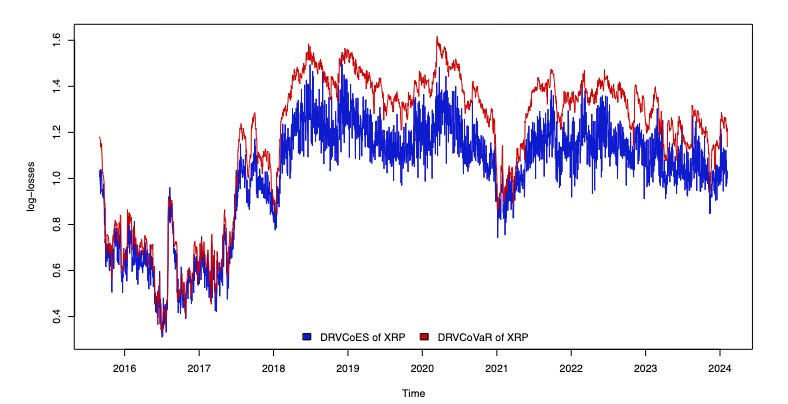
Does intelligence modeling have name for terrible error of system that doesnt work at extremes- today's example hills of city of angels dont have water pressre when winds of fire also make it impossible for planes to dump water - infamous 2008 financial example: insurnce companies had taken out chain of extreme risks that were correlated with each other as well as being actualosed by fake ratings

Pro Search

Answer
The phenomenon you're describing is often referred to as "tail risk" or "extreme event modeling failure" in intelligence and risk modeling. This concept encompasses the tendency of some systems or models to break down or fail catastrophically under extreme conditions that weren't adequately accounted for in their design.

Tail Risk and Black Swan Events

In risk management and financial modeling, these extreme scenarios are sometimes called "tail events" or "black swan events." They represent rare but high-impact occurrences that fall outside the range of normal expectations and can have severe consequences
15
.

Examples from Recent Events

2025 Los Angeles Wildfires

The recent wildfires in Los Angeles provide a stark example of this type of system failure:
  1. Water System Breakdown: The city's water infrastructure, designed for normal usage, failed to maintain adequate pressure in hillside areas during extreme fire conditions
    16
    22
    .
  2. Compounding Factors: High winds grounded firefighting aircraft, eliminating a crucial backup method and further straining the already overwhelmed ground-based water system
    5
    25
    .
This cascading failure demonstrates how multiple systems can break down simultaneously under extreme conditions, leading to a catastrophic outcome that wasn't adequately planned for.

2008 Financial Crisis and AIG

The 2008 financial crisis, particularly the near-collapse of AIG, offers another prime example:
  1. Correlated Risks: AIG had taken on massive amounts of risk through credit default swaps (CDSs) that were highly correlated with each other and with broader market conditions
    30
    31
    .
  2. Misrated Securities: Many of these risks were based on securities that had been improperly rated, leading to a severe underestimation of the true risk exposure
    31
    32
    .
  3. Systemic Impact: When the housing market collapsed, it triggered a chain reaction that threatened not just AIG but the entire financial system, revealing the hidden interconnectedness of these risks
    33
    34
    .

Modeling Challenges

These examples highlight several key challenges in modeling extreme events:
  1. Underestimation of Tail Risks: Traditional models often underestimate the likelihood and impact of extreme events
    15
    38
    .
  2. Correlation in Extreme Conditions: Many systems that appear independent under normal conditions can become highly correlated during crises
    30
    32
    .
  3. Cascading Failures: The failure of one system can trigger a chain reaction, leading to widespread collapse
    11
    26
    .
  4. Data Limitations: Historical data often lacks sufficient examples of extreme events, making it difficult to model them accurately
    8
    36
    .

Addressing the Challenge

To better prepare for these extreme scenarios, researchers and policymakers are exploring several approaches:
  1. Stress Testing: Subjecting systems to simulated extreme conditions to identify vulnerabilities
    17
    23
    .
  2. AI and Machine Learning: Using advanced algorithms to identify complex patterns and potential failure modes that might be missed by traditional models
    8
    36
    .
  3. Interdisciplinary Approaches: Combining insights from multiple fields to better understand and model complex, interconnected systems
    20
    38
    .
  4. Improved Risk Communication: Ensuring that the limitations and uncertainties of models are clearly communicated to decision-makers
    38
    .
By recognizing the potential for these extreme failure modes and working to address them, we can build more resilient systems better equipped to handle the unexpected challenges of an increasingly complex world.
Is there a term for lack of transparency where a market's tail risks are not open intelligence mapped. Adftr all, someone profits from others losses - and it seems that with tail risks. losers are those who were most separated from deep data chains while gainers were some of those at top of such data. A general context for asking is nuclear energy. Whilst theoretcally this could be an energy solution i would not chose to brimg up a family near nuclear plant beciase over time humans fail to attend 24/7 or fail to keep the peace. Can autonomous monitoring bring safety to where human attention has history of failing and future secarion proofchecking e some

Pro Search

Answer
There isn't a single widely-used term that precisely captures the lack of transparency around unmapped tail risks in markets, especially in the context of nuclear energy. However, several concepts relate to this issue:

Information Asymmetry and Tail Risk Opacity

The scenario you describe, where those with access to deep data chains profit from tail risks while others suffer losses, is a form of information asymmetry. In the context of tail risks, we might call this "tail risk opacity" or "extreme event information asymmetry."This opacity can lead to:
  • Mispricing of risk in markets
  • Concentration of losses among less-informed participants
  • Potential for exploitation by those with superior information

Nuclear Energy Safety and Autonomous Monitoring

Regarding nuclear energy safety, your concerns about human fallibility in 24/7 monitoring and maintaining peace are valid. The nuclear industry has historically faced challenges related to:
  • Human error
  • Complacency over time
  • Geopolitical instability
Autonomous monitoring systems could potentially address some of these issues:Benefits of Autonomous Systems:
  • Continuous, tireless monitoring
  • Rapid detection of anomalies
  • Objective data collection and analysis
Challenges and Considerations:
  • Cybersecurity risks
  • Need for human oversight and decision-making
  • Potential for new types of errors or biases

Emerging Trends in Nuclear Safety

Recent developments in nuclear plant safety monitoring include:
  • Advanced remote monitoring technologies
  • AI-powered predictive maintenance
  • Drone-assisted inspections
These innovations aim to enhance safety by reducing reliance on human attention and improving early detection of potential issues.

Conclusion

While autonomous monitoring can significantly improve nuclear safety, it's not a complete solution to the complex challenges of nuclear energy. Transparency around tail risks and equitable access to critical safety information remain important considerations for policymakers and the public.The term "tail risk opacity" could be used to describe the lack of transparency around extreme event risks, though it's not a widely established term. As for nuclear safety, autonomous systems offer promising advancements but must be implemented thoughtfully alongside robust human oversight and comprehensive risk management strategies.
Related
How can transparency in AI models be improved to avoid hidden risks
What are the main challenges in achieving transparency in complex AI systems
How does duration drift impact the stability of fixed-income markets
What role do hedge funds play in exacerbating hidden risks in financial markets
How can autonomous monitoring enhance safety in high-risk industries like nuclear energy
blog.ml-quant.com
fastercapital.com
mdpi.com
View More
Search Videos
Generate Image