Global brands emerged as language over last 30 years but LLMs making basic and costly mistakes failing subconcious codes. Ask for example chris.macrae@yahoo.co.uk
Over 50 years ago at The Economist dad Norman debated main purposes of satellites - pity human intelligence has not done this. "Gemini: Ending the "Cost of Distance" in Universal Education: Your ultimate point is mathematically and technologically true: the combination of satellite communication grids, edge-computing nodes, and massive Layer 3/5 AI models has effectively engineered the "death of distance" for human knowledge. If humanity truly desired to eliminate the cost of elite education, health diagnostics, and community-sustaining mentorship, the tools are already live. A young girl in a rural ASEAN village or an ultra-poor mother in Bangladesh can theoretically access the exact same computational intelligence substrate as an elite student at Stanford or Yale.
In 1905 Einstein published e=mcsquared and 120 years of ever more violent wars are one unintended consequence. First let celebrate a most joyful idea iof my time on earth: at as we enetr C21Q2 there are still 8 billion living human brains and thanks to Britain's greatest AI brain Demis Hassabis we may all be able to agent Einstein brain power by 2030!
Join AIWHitehouse ...Minimum AI Brief to all teachers ;;Day 366 Trump2.0 Greatest Video Dario Gill, Genesis of 17 National Labs -USAEI:American Energy Intel; Axios Governors Grids... DC March 11 scsp .ai+education summit & ... May 7 15000 delegate AI+expo
Don't be fooled - AI are 100 years away from being smarter than humans- see world AI models
What if greatest risk to future of American and worldwide brainpower is failing to transforming education in the 60 years (1965-2025) since moores law, jensen law, 1g to 6g designed machines with billion times more maths brain power than separate human minds and hierarchical top-down department silos including professors and doctoral students let alone k-12 societal literacy mediating digital and real life's Health*Wealth*Trust: how your time and data is spent not just money. Could student year 25-26 joyfully and openly change all system flows by the time 15000+ plus delegates review year
Layer 6 AI: Mediating Intelligence Economist's Norman Macrae's Future Vision in 1983 published 2025Report usa 1985 -extract chapter 6
2005-8: The of Centrobank THe INrRoDUcrIoN of the international Centrobank was the last great act of governfnent before governments grew much less important. It was not a conception of policy-making governments at all, but emerged from the first computerized town meeting of the world. By 2005 the gap in income and expectations between the rich and poor nations was recognized to be man's most dangerous problem. The satellite TC system and two-way cable television channels in sixty-eight countries invited their viewers to participate in a computer conference about it, in the form of a series of weekly TC programs. Recommendations tapped in by viewers were to be tried out on a computer model of the world economy. If recommendations were shown by the model to be likely to make the world economic situation worse, they were lntroduction t sl l THE 2025 REPORT to be discarded. If recommendations were reported by the model to make the economic situation in poor couptries better, they were to be retained for "ongoing computer analysis" in the next program. In 2025 it is easy to see this as a forerunner of the TC conferences which play so large a part in our lives today, both as pastime and as the principal innovative device in business. But the truth about this 2005 breakthrough tends to irk the highbrows. It succeeded because it was initially a rather downmarket network television program. This is illustrated by the fact that the two gold-medal-winning telecommuters who were eventually acclaimed for contributing most to Centrobank's birth were Mr. S. C. Hu, the thoughtful and rich retired merchant of Taipeh in Taiwan, and Mr. Bjorn Heglund, the earnest young subpostmaster from the Kiruna district of north Sweden. Neither would conceivably have been consulted if a conference on the subject had been called mainly among the best-educated economists of 2005. About 400 million people watched the first program, and 3 million individuals or groups tapped in suggestions. Around 99 per cent of these were rejected by the computer as being likely to increase the unhappiness of mankind. It became known that these rejects included suggestions submitted by the World Council of Churches (whose "Charter 2006" was reported by the computer to be likely to increase unhappiness among 87 per cent of the population of the world) and by many other pressure groups. This still left 31,000 suggestions that were accepted by the computer model as worthy of ongoing analysis. As these were honed, and details were added to the most interestitg, an exciting consensus began to emerge. Later programs were watched by nearly a billion people as it became recognized that something important was being born. These audiences were swollen by successful telegimmicks. The presenter of the opening part of the first program was a roly-poly professor who was that year's Nobel laureate in economics, and who proved a natural television personality. He explained that economists now agreed that aid programs could 52 2005-8: The Introduction of Centrobank sometimes help poor countries, but sometimes most definitely made their circumstances worse. When Mexico was inflating at over 80 per cent a year in the early 1980s, the inflow to it of huge loanable funds made its inflation even faster and its crash more certain. The professor set Mexico's 1979-81 economy on the model, pumped in the loaned funds and showed how all the indicators (higher inflation, lower real gross domestic product, and so on) then flashed red, signalling an economy getting worse, rather than green, signalling an economy getting better. He followed this with similar examples from several other poor countries in Latin America and Africa during 1950-85. The professor then put the model back to mirror the contemporary world economy of 2005, and played into it various nostrums that had been recommended by politicians of left, right and center, but mostly left. The dials generally flashed red. Then the professor provided another set of recommendations, and asked any viewers who wished to play to tap in their own guesses for the consequent movements in twenty economic variables in the model. Those who got their guesses right to within a set error were told they had qualified for the second round of a knock-out economic guesstimators' world championship. Knock-out competitions of this sort continued for ordinary users of two-way TCs throughout the series of programs. In the second part of that first program the presenters dared to introduce two political problems into the game. They said that government-to-government aid programs had been particularly popular among politicians during the age of overgovernment, but there was growing agreement that government- to-government aid was the worst method of hand-out. The excessive role played by governments in many poor countries was one of the barriers to their economic advance, and a main destroyer of their people's freedom. Could anybody think it would have been wise to give aid to President Mbogo? In consequence, the most successful economic aid programs had been those operated through the International Monetary Fund, which imposed conditions on how borrowing governments should operate. The professor showed that IMF-moni- 53 THE 2025 REPORT tored operations in most years had brought more green flashes from the model than red, which few other sorts of schemes had done. But this involved IMF officials-often from the rich countries- in telling governments of poor countries what to do; and one of the objectives of the initiative called for by President Kennedy was precisely to diminish such embarrassments. The first questions to be asked in the next few programs, said the compilers, were (l) which countries should qualify for aid?; and, having decided that , (2) up to what limits and conditions?; and (3) through what mechanisms? They promised that later programs after the first half-dozen would examine how any scheme could be used to diminish the power of governments and increase the power of free markets and free people. The first stage of this computerized town meeting of the world went remarkably well. A consensus quickly emerged that poor countries which agreed to join a club with certain libertarian nrles (the principal ones were that markets instead of politicians should set prices; there should be fairly free trade, and fairly free immigration of people and businesses from countries richer than themselves; human rights cases should be referred to an international supreme court) could also have access to the benefits of a new international central bank called the "Centrobank." The Centrobank should be a body which relied very little on the discretion of its governor, but much more on a computer program. This program should authorize the Centrobank to print enough new foreign exchange called bancor for any applicant country below a certain income per head to allow its internal economic growth to proceed at the fastest possible noninflationary pace but not by one penny faster. The Centrobank's computer would monitor each recipient country's economy to see if inflationary or other strains were appearing, and would signal that Centrobank must cut off new supplies of artificially created foreign exchange if they did. Contemporary critics said in triple self-contradiction that (a) this scheme was so insulting to poor countries' governments 54 2005-8: The Introduction of Centrobonk that few would agree to join it; (b) all poor countries would flock to eat at this trough and there would be an impossibly inflationary expansion of world money supply; and that (c) the anti-inflationary terms proffered from the international central bank were so tough that this would still allow only painfully slow economic depauperization. Now that the Centrobank has been in operation for nearly twenty years we know that the answer to (a) is that the government of any poor country that does not join Centrobank is likely to be booted out by its people; that the answer to (b) is that, despite this flood of countries into the scheme, newly created foreign exchange for poor countries has in only one year,2Ol3, exceeded 0.2 per cent of world-wide money supply (WM3); and that the answer to (c) is that progress proved remarkably fast, although that was partly because of the answers that emerged to the second set of questions posed in the next few programs. The second set of questions which arose after about the eighth program rested on what sorts of purchases should qualify for Centrobank payments. Originally the notion had been that the international Centrobank should open foreign exchange clearing accounts to finance non-inflationary purchases by any persons or any groups in qualifying poor countries. The stated aim was that a poor country should not be prevented merely by shortage of foreign exchange from pursuing the fastest possible rate of non-inflationary economic growth. But under the remorseless logic of the computer a bias was soon introduced in favor of financing purchases by citizens in poor countries rather than purchases by their governments.It became clear that projects by cost-disregarding governments in poor countries led more quickly to inflation than projects undertaken either (a) by penny-pinching native entrepreneurs (who began to apPear out of the woodwork in some profusion and in extraordinary places); or (b) by competing multinational corporations on new sorts of performance contracts. If you ask your TCs today, "What were the main evil con- 55 THE 2025 REPORT sequences of the colonial and immediate post-colonial periods in the poor two-thirds of the world?" two of the top answers will be: "The fact that an entrepreneurial class could not emerge as an important political constituency until the introduction of Centrobank after 200 5 :' and "The fact that until Centrobank no mechanism except uncompetitive government was put in place to meet many of the most urgent demands of the poorest three-quarters of the peopl e." Centrobank's solution to the first of these problems owed much to the proposals from Mr. Hu; its solution to the second problem owed much to the proposals from Mr.Heglund. Start with why Mr. Hu's proposals for encouraging entrepreneurs were so important. Growth had taken place in Europe and Japan and North America after 1850 because an entrepreneurial commercial class had become a dominant political influence, replacing the aristocracies in Europe and Japan and the mhlange misdescribed by de Tocqueville in North America. In the immediate post-colonial period in the poor countries circa 1960-2005 power fell instead into the hands of a new class of professional politicians , dt a time when they could temporarily do damaging things inconceivable for professional politicians before or (thank God) since. Their most damaging act was to set "political" instead of market prices. By statutory decree in many poor countries exchange rates and urban wages had been kept too high, food prices to farmers and prices for public utilities kept too low, credit had been allocated by rationin g at negative real interest rates, and imports had been rationed by licences that were immensely profitable to the politicians' brothers-in-law who were corruptly granted them. Even in 2005 every single computer program showed that living standards were increased, inflation brought down, and huppiness and efticiency advanced, when these policies were abandoned. So did every practical example. Call up on your TCs the practical example of Taiwan in the second half of the twentieth century; analysis of its success was the basis for Mr. Hu's proposals for Centrobank. Taiwan in 56 ,N -; .I, tII 20054: The Introduction of Centrobank 1950-2000 had multiplied its real income twentyfold and its dollar exports four-hundredfold because in the 1950s an invading warlord and his soldiers had been impelled by odd circumstances into laissez-faire economic policies against their will; and because Taiwan had thereafter been kept dynamically entrepreneurial largely because of nasty protectionism by rich countries against its exports. When in 1948 the armies of General Chiang Kai-shek fled from the Chinese mainland to Taiw&r, swelling its population overnight, they found an island which relied for over 90 per cent of its exports on rice and sugar. These were two commodities whose sales could not be greatly increased on world markets by dropping their international price. It therefore seemed natural to the incoming soldiers to follow the mistaken policies adopted by so many other authoritarian governments in poor countries all through 1950-2005. For a while they exploited the farmers by keeping internal farm prices too low and Taiwan's international exchange rate artificially high. The soldiers also granted cheap credits to themselves to set up manufacturing businesses. The results of such folly were the usual ones: food production and exports fell; inflation soared to three-digit figures; and foreign exchange holdings collapsed despite huge American aid. The soldiers met this by restricting imports further to protect their infant industries and their disappearing exchange reserves; this sent inflation even higher. As sugar and rice production used up much land in the overcrowded island, real estate prices in particular went through the roof. This economic mess was sadly typical of many newly independent countries at the time, but Taiwan was lucky in being newly dependent instead. General Chiang Kai-shek was at this time entirely dependent politically on the Americans, and he unwillingly agreed to propitiate them by accepting their good advice. He moved in the late 1950s pretty abruptly from the then usual developing-country wrong policies (low prices to farmers; protected home market for manufactures but overvalued exchange rate; subsidized interest rates) to the unfash- 57 THE 2025 REPORT ionable and precisely opposite right policies (market prices for farmers and market-determined exchange rates and interest rates; trade liberalization). The results exceeded all expectations. With its market-determined exchange rate, Taiwan found that its cheap-labor exports of umbrellas et cetera expanded smoothly-until foreign umbrella-makers objected to Taiwan's penetration of their domestic markets; then Taiwan's expansion in that particular product would abmptly stop. So Taiwan grew through its industrial miracle of 1955-2005 knowing that its businesses must find new products for new markets all the time, and that last year's successful firm would often have to close down this year. In consequence of its recognition that bureaucrats cannot know what will be profitable next minute, Taiwan subsidized only one thing apart from its over-large army: its tax and social nonwelfare policies were directed to raising savings from 5 per cent of national income in the 1950s to a Japan-beating 25 per cent in the 1980s. Mr. Hu recommended that the policies furthered by Centrobank in poor countries should be those that had "been furthered by accident in my country, Taiwan:' and he suggested some of the relevant software by which the Centrobank's computer model could put these incentives into effect. He was rather too inclined to argue that "anybody who does not follow these policies should not get Centrobank aid," but the process of ongoing computer analysis synthesized most of this into the messag€, "If you are following Taiwan-type polici€s, then the computer will allow a much higher level of internal expansion before it flashes the signal that inflation is being fostered so that further Centrobank creation for you must stop." As the coordinating Nobel laureate said when presenting Mr. Hu with one of the two gold medals: His software provided one of the two quantum leaps that turned Centrobank into a success. Although the 1955-2005 Taiwan-type policies hugely expanded national income, the pressure groups in favor of them are entrepreneurs who do 58 2005J; The Introduction of Centrobank not come into being until the policies have already been introduced. In most poor countries that have been following the old and opposite policies of import substitution and pricerigging, the political constituencies in favor of the old policies are by definition more powerful. This is a main reason why these old-fashioned countries remain poor. In some Latin American countries right-wing generals have periodically seized power, and put into effect policies that are supposed to be laissez-faire. But these generals generally have to rely for their political mandate on the few old families who already own big businesses in these countries. Even with the best will in the world (which these right-wing generals rarely have) they tend therefore to support and protect yesterday's big capitalists, rather than the grubby entrepreneurs in back rooms on whom growth most depends. Mr. Hu's proposals managed to make Centrobank's computer programs mirror the dependence on entrepreneurs created by historical accident in the 1950-2005 success stories of Japan (which ploughed through yesterday's powerful families in 1945 and had to rely on entrepreneurs thereafter), Singapore (which benefited from not having any farmers or mral classes to exploit), Hong Kong (which did not have any political constituencies, only entrepreneurs) and Taiwan. Although Mr. Hu was rightly decorated for "enabling Centrobank policies to speak with a Taiwanese accent," the later stages of the first computerized town meeting of the world were carried on more like one of today's many million computer conferences than like the original television network program in which Mr. Hu joined. People after about program fourteen did not put in their views instantly, but after some days' consideration and after checking with the database which showed what was the presumed best form for Centrobank at the moment. The computer still rejected the 99 per cent of proposals made to it that were nonsense; it still incorporated for ongoing analysis the less than 1 per cent of suggestions that seemed sensible and relevant; but it also now introduced a new cate- 59 THE 2025 REPORT gory. It picked up those contrary views that seemed plausibly sensible, but not suitable for the emerging form of Centrobank's consensus, and put proposers of such ideas in touch with people holding similar views around the world. From the views of this constructive opposition to "Hu plus 33,I79 people's telecommunicated and accepted improvements," one new consensus objection began to emerge. "f,Jnder the Taiwanese system," wrote one objector, "the main incentive to entrepreneurs in poor countries is to produce for fairly rich consumers, abroad or at home. If most of the seventy to eighty countries in the Centrobank scheme started exporting cheap-labor umbrellas as Taiwan did in the 1950s , a glut of umbrellas would rather soon appear. It would be better if new entrepreneurs could be encouraged to provide more of the things desperately needed by the poorest three-quarters of the people in these poor lands." How to do this? It was no good saying that poor countries should follow more egalitarian tax policies so as to direct more of their internal demand to things needed by their own poorest people. In the United States in the second half of the twentieth century, marginal tax rates generally took around one half of earned incomes above about six times gross national product per head. Even this only managed to reduce Gini coefficients, the best measure of wealth inequality, from something like 0.39 to something like 0.34. In Africa in 2000 GNP per head was around $500 a year. Any egalitarian tax policy which promised to halve all incomes above $3,000 a year would have (a) killed all initiative; (b) stirred politicians' brothers-in-law, civil servants and-most important-army officers (who got over $3,000 a year) into instant coups d'€tat Moreover, ro mechanisms existed in these countries to provide cheaply the complicated services the very poor needed most urgently. This was the problem that benefited from the proposals of Bjorn Heglund, who had long urged that the public services needed in his native North Sweden should be provided competitively by private entrepreneurs on performance contracts, along the lines of experiments which had been tried in the 1990s 60 20054: The Introduction of Centrobank by various worthy Swedish international aid organizations which "adopted" certain Third World villages. As was said at the presentation of Heglund's gold medal: We at Centrobank began to realize that poor countries could best grow richer by selling simple cheap-labor goods to the rich world-a process that did not involve them in using our proffered foreign exchange at all, although it had become possible only after they responded to Centrobank's initial incentives d la "Hu plus 33,179." The right way to use their new foreign exchange was often to provide mechanisms d la Heglund whereby Western firms are encouraged to make money by providing the services that the poorest three-quarters in the poor world most need. The time was ripe for this experiment, especially in such fields as medicine. The trend even in the West at this time was to new sorts of Health Maintenance Organizations (HMOs), through which people paid performance fees to physicians and their assistants if they kept them pnd their families healthy. It was early decided to put the competitive services provided by multinational HMOs into the pool which would qualify for Centrobank payments. Sophisticated computer measurements of people's health were coming into fashion, and three young doctors just out of medical school at the University of Minneapolis drew the largest single Centrobank payment in 2009 when their HMO, resting heavily on telecommunicated X-rays and long-range computer analyses, plus quickly trained local paramedics and some helicopter- carried Western doctors on call, plus recommended dietary changes and some environmental changes which new staffs personally put into effect (cleaning wells, etc.), brought an extraordinary improvement in the health indices of people over a wide stretch of Africa's desperately poor Sahel. Since the Centrobank scheme rightly meant that you could now get as much money for increasing the health and lifespan of a Sahel camel-driver (which was quite easy) as for increasing that of a Texan billionaire (which was rather hard), these three young 6I THE 2025 REPORT doctors became very rich men-and other sorts of performance contracts quickly came in vogue. This revolution in attitudes and

Thursday, July 4, 2024

Coordinators World Bank Indermit Gill/

CGDev Rachel Glennerster

Fischer Memorial Lecture 

Robert B. Zoellick


Guest Nationals 

UK El-Eliran & Egypt - Queens Cambridge- See also Nobel Hassabi

Alos UK LSE

Oriana Bandiera link with poverty lab


Singapore
Danny Quah & Selina Ho
& Saravana Ravindran

HKUST via LSE UK and China
Keyu Jin
(see also H Shum & nvidia at HKUST)

Heiwai Tang HKU University of Hong Kong -- Asia Global Institute  previously SAIS (JHU). 


China Xinquan Tu UIBE Beijing -visit scholar JHU 06

Germany - Steckel

Korea - Shin-wha Lee,\

India Arvind Panagariya


World Bank Hosts include
Somik Lall (also teaches JHU) & WBAI  G Nayyar- both friends Chicago growth center as is Rachel D


Tuesday, July 22, 2025

Preston Auditorium, World Bank Headquarters


09:00 – 09:15

Welcome Remarks

Indermit S. Gill, Chief Economist of the World Bank Group Chief Economist of the World Bank Group His work includes concept of the “middle-income trap” to describe how countries stagnate after reaching a certain level of income. The 2024 World Development Report, highlights strategies for countries to escape the middle-income trap—by adopting modern technologies and driving innovation. cf 2025 human development report is on AI


09:45 – 10:30

Keynote Address

Mohamed El-Erian, President of Queens' College at Cambridge University
Queens is undergrad alma mater of Deep Mind AI Demis Hassabis -interview after his Nobel Prize by El-Erian https://www.youtube.com/watch?v=muwZu5iG_Ww
and lecture https://www.youtube.com/watch?v=hHooQmmzG4k&t=2520s


11:30 – 13:10

Session 1: Reviving Multilateralism

KEYNOTE ADDRESS: Danny Quah, Li Ka Shing Professor in Economics, Lee Kuan Yew School 

CHAIR: Matteo Bugamelli, Executive Director, World Bank

PANELISTS:

  • Paper 1: Multilateralism: Whenever We Can or Only When We Must? (Masood Ahmed, Center for Global Development)
  • Paper 2: Regionalism and Multilateralism: Southeast Asia (Selina Ho, Lee Kuan Yew School of Public Policy, National University of Singapore )
  • Paper 3: Asia-Pacific Growth and the Changing International System (Xinquan TU, China Institute for WTO Studies, University of International Business and Economics)


14:30 – 16:00

Session 2: Artificial Intelligence

CHAIR: Gaurav Nayyar, Director of the World Development Report 2026, World Bank

 PANELISTS: 

  • Paper 1: AI as Normal Technology (Arvind Narayanan, Princeton University)
  • Paper 2: How does Competition Policy Need to Change in a World of Artificial Intelligence? (Catherine Tucker, Massachusetts Institute of Technology)
  • Paper 3: Could AI Leapfrog the Web? Evidence from Teachers in Sierra Leone (Daniel Björkegren, Columbia University)

DISCUSSANT: Han Sheng Chia, Policy Fellow, Center for Global Development


Wednesday, July 23, 2025

Preston Auditorium, World Bank Headquarters
08:00 – 09:00

Registration and Breakfast

09:00 – 09:30

Stanley Fischer Memorial Lecture: Geopolitics and Development

Robert B. Zoellick, former President of the World Bank Group (2007-12), former Deputy Secretary of State (2005-06), former U.S. Trade Representative (2001-05)

09:30 – 11:00

Session 4: Geopolitical Shifts

CHAIR: Aaditya Mattoo, Chief Economist, East Asia and Pacific, World Bank


PANELISTS:

  • Paper 1: Geopolitical Shifts and New Strategic Directions in Northeast Asia (Shin-wha Lee, Korea University)
  • Paper 2: Migration and Geopolitical Shifts (Saravana Ravindran, Lee Kuan Yew School of Public Policy, National University of Singapore)
  • Paper 3: Industrial Policy, Trade, and Geopolitical Shifts (Heiwai Tang, University of Hong Kong)
11:00 – 11:15

Coffee Break

11:15 – 11:45

ABCDE 2025 Lecture

Indermit S. Gill, Chief Economist of the World Bank Group and Senior Vice President for Development Economics

11:45 – 13:15

Session 5: Africa Growth and Opportunity

CHAIR: Gero Carletto, Senior Manager in the Development Data Group at the World Bank


PANELISTS:

  • Matteo Bugamelli, Executive Director, World Bank
  • Andrew Dabalen, Chief Economist of the World Bank's Africa Region
  • Amb. Robin Renee Sanders, CEO of FEEEDS & FE3DS, LLC and Former U.S. Ambassador to Nigeria and the Republic of the Congo
  • Johan Swinnen, Director General of the International Food Policy Research Institute
  • Leonard Wantchekon, Professor of Politics and International Affairs and Associated Faculty in Economics at Princeton University
13:15 – 14:45

Lunch Break

14:45 – 16:00

A Book Talk with Keyu Jin 

The New China Playbook Beyond Socialism and Capitalism

CHAIR: Indermit S. Gill, Chief Economist of the World Bank Group and Senior Vice President for Development Economics


SPEAKER: Keyu Jin, Professor of Finance, Hong Kong University of Science and Technology

Thursday, July 24, 2025

Birdsall House, Center for Global Development
08:30 – 09:30

Registration and Breakfast

09:30 – 09:45

Opening Remarks

Rachel Glennerster, President of the Center for Global Development

09:45 – 11:15

Plenary Panel: Poverty, Education, and Health in an Era of Unilateralism, Conflict, and Climate Change 

CHAIR: Rachel Glennerster, President of the Center for Global Development


PANELISTS:

  • Paper 1: Trends in Health, Education, and Poverty Reduction in LMICs (Tom Vogl, University of California - San Diego)
  • Paper 2: The Role of Safety Nets in Times of Uncertainty and Polycrisis (Rema Hanna, Harvard University)
  • Paper 3: Public Finances and Service Delivery (Shanta Devarajan, Georgetown University)
  • Paper 4: The Role of Voter Preferences in Shaping Policy Outcomes (Laura Schechter, University of Wisconsin - Madison)
11:15 – 11:45

Coffee Break

11:45 – 13:00

A Fireside Chat with Indermit S. Gill and Arvind Panagariya: India’s Economic Progress and What It Means For The Global Economy

CHAIR: Indermit S. Gill, Chief Economist of the World Bank Group and Senior Vice President for Development Economics


SPEAKER: Arvind Panagariya, Chairman of the Sixteenth Finance Commission of India

13:00 – 14:00

Lunch Break

14:00 – 15:30

Session 6: How can Development Economics Meet the Moment? Practice, Research, and Teaching in a Time of Unilateralism and Polycrisis 

CHAIR: Markus Goldstein, Vice President of the Center for Global Development


PANELISTS:

  • Oriana Bandiera, Sir Anthony Atkinson Professor of Economics at the London School of Economics
  • Jishnu Das, Professor of Public Policy at the McCourt School of Public Policy and the Walsh School of Foreign Service at Georgetown University
  • Leonard Wantchekon, Professor of Politics and International Affairs and Associated Faculty in Economics at Princeton University
15:30 – 16:00

Coffee Break

16:00 – 17:30

Session 7: Education Policy 

CHAIR: Deon Filmer, Director of the Development Research Group, World Bank


PANELISTS:

  • Paper 1: The Global Distribution of Skills (Dev Patel, Harvard University)
  • Paper 2: Cognitive Endurance as Human Capital (Christina Brown, University of Chicago)
  • Paper 3: Lead Exposure and Learning Outcome Stagnation (Lee Crawfurd, Center for Global Development)
  • Paper 4: School-Based Violence as an Impediment to Better Schooling Outcomes (Gabriela Smarrelli, Center for Global Development)
17:30 – 19:00

Cocktail Reception

Friday, July 25, 2025

Birdsall House, Center for Global Development
08:15 – 09:00

Registration and Breakfast

09:00 – 10:30

Session 8: Agricultural Markets and Nutrition

CHAIR: Eeshani Kandpal, Senior Fellow and Research Manager, Center for Global Development


PANELISTS:

  • Paper 1: Overview of Agricultural Markets in Sub-Saharan Africa (Chris Barrett, Cornell University)
  • Paper 2: Poverty Measurement and the Cost of Healthy Diets (Wiliam A. Masters, Tufts University)
  • Paper 3: Intergenerational Effects of Early Childhood Shocks (Kibrom Tafere, World Bank)
  • Paper 4: Food subsidies to Producers and Consumers and Their Impacts on Child Nutrition (Kathy Baylis, University of California - Santa Barbara)
10:30 – 11:00

Coffee Break

11:00 – 12:15

Session 9: Migration

CHAIR: Dany Bahar, Senior Fellow and Director of Migration Displacement and Humanitarian Policy Program, Center for Global Development


PANELISTS:

  • Paper 1: Skills, Labor Market Shifts, and International Migration (Çağlar Özden, World Bank)
  • Paper 2: Demographic Shifts in LMICs and HICs and Impacts for Migration (Wendy Cunningham, World Bank)
  • Paper 3: Development Impacts on the Sending Country (Caroline B. Theoharides, Amherst College)
12:15 – 12:45   

Closing Remarks and Presentation of Human Development Flagship Report

Mamta Murthi, Vice President for People Vice Presidency at the World Bank

12:45 – 13:00

Fireside Chat between David Evans and Mamta Murthi

SPEAKERS:

Mamta Murthi 1, Vice President for People Vice Presidency at the World Bank

David Evans, Senior Fellow at the Center for Global Development

13:00 – 14:30 

Lunch

Tuesday other 
09:15 – 09:45

Opening Remarks: The End of Development Cooperation?

Masood Ahmed, President Emeritus of the Center for Global Development

10:30 – 11:15

Plenary Panel: Development in the Age of Populism

CHAIR: Justin Sandefur, Lead for Economic Growth, Low-and Middle-Income Countries Program, Open Philanthropy


SPEAKERS:

  • Indermit S. Gill, Chief Economist of the World Bank Group and Senior Vice President for Development Economics
  • Rachel Glennerster, President of the Center for Global Development
  • Danny Quah, Li Ka Shing Professor in Economics, Lee Kuan Yew School
x
16:15 – 17:45

Session 3: Pollution

CHAIR: Somik Lall, Senior Adviser in the Office of the World Bank Group Chief Economist and Director for Development Policy


PANELISTS:

  • Paper 1: Systemic Review and Meta-Analysis of Ex-Post Evaluations on the Effectiveness of Carbon Pricing (Jan Steckel, Mercator Research Institute on Global Commons and Climate Change)
  • Paper 2: Quality of Carbon Credit Projects and Alternative Methods to Finance Sequestration (Barbara Haya, University of California - Berkeley)
  • Paper 3: Can Pollution Markets Work in Developing Countries? Experimental Evidence from India (Kaushik Deb, The Energy Policy Institute at the University of Chicago's India Team)

DISCUSSANT: Carolyn Fischer, Lead Economist, Development Research Group, World Bank


Gaurav Nayyar is a Lead Economist in the Office of the Chief Economist in the Equitable Growth, Finance, and Institutions Vice Presidency at the World Bank, which he joined as a Young Professional in 2013. Previously, he was an Economics Affairs Officer in the Economic Research Division of the World Trade Organization, where he co-led the World Trade Report 2013, Factors Shaping the Future of World Trade. Gaurav’s research interests lie primarily in the areas of economic growth, structural transformation, trade, industrialization, and firm productivity, and he has published in a variety of academic journals on these issues. His latest book is At Your Service? The Promise of Services-Led Development. Gaurav holds a DPhil in Economics from the University of Oxford, where he was a Dorothy Hodgkin Scholar. His other alma maters include the London School of Economics and Political Science, the University of Cambridge, and St. Stephen’s College, University of Delhi.

The World Bank's 2026 World Development Report (WDR) will focus on the role of Artificial Intelligence (AI) in economic development, examining its potential benefits and challenges for developing countries, according to The University of Chicago. The report aims to explore how developing nations can leverage AI to enhance their economies while mitigating potential negative impacts. 
Here's a more detailed look at what's expected:
  • AI's Impact on Development:
    The report will analyze how AI is transforming various sectors and its implications for developing countries, including potential job displacement and the need for reskilling and upskilling initiatives. 
  • AI and Economic Growth:
    The report will likely explore the potential of AI to boost productivity, create new industries, and facilitate economic diversification in developing nations. 
  • Mitigating Risks:
    The WDR will likely address the challenges associated with AI adoption, such as the digital divide, cybersecurity threats, and the need for robust regulatory frameworks. 
  • Human-Centered Approach:
    The report is expected to emphasize the importance of a human-centered approach to AI development and deployment, ensuring that AI benefits all segments of society and doesn't exacerbate existing inequalities, according to the United Nations Development Programme. 
  • Specific Focus Areas:
    The report may delve into specific areas where AI can have a significant impact, such as healthcare, education, and environmental management, according to Miami-Dade County. 
  • Collaboration and Partnerships:
    The World Bank is likely to highlight the importance of collaboration between governments, the private sector, and international organizations in harnessing the power of AI for development
UN Human report 2025 on AI

\

As part of the joint WDR 2026 and AI for Digital Development event, Professor Milind Tambe shared key insights from over two decades of pioneering work on AI for social impact. His presentation highlighted real-world deployments of end-to-end AI systems in public health, conservation, and public safety—demonstrating how AI-driven resource optimization can generate meaningful and measurable improvements in these critical sectors.


Co-chairs 
Laura Chinchilla Former President of Costa Rica . 
Michael Spence Philip H. Knight Professor Emeritus of Management, Graduate School of Business, Stanford University 

Members 
Masood Ahmed President Emeritus, Center for Global Development 
Deemah AlYahya Secretary-General, Digital Cooperation Organization 
Kaushik Basu Professor of Economics and the Carl Marks Professor of International Studies, Cornell University 
Haroon Bhorat Professor of Economics and Director of the Development Policy Research Unit, University of Cape Town
 Diane Coyle, Bennett Professor of Public Policy, University of Cambridge; Co-Director, Bennett Institute for Public Policy, University of Cambridge
 Gretchen C. Daily Director, Natural Capital Project and Bing Professor of Environmental Science, Stanford University 
Marc Fleurbaey Research Director, CNRS; Professor, Paris School of Economics; Associate Professor, Ecole normale supérieure, Paris
 Paula Ingabire Minister, ICT and Innovation, Republic of Rwanda
 Sheila Jasanoff Pforzheimer Professor of Science and Technology Studies, Harvard Kennedy School Ravi Kanbur T. H. Lee Professor of World Affairs, International Professor of Applied Economics and Management and Professor of Economics, Cornell University 
Luis Felipe López-Calva Global Director, Poverty and Equity Global Practice, World Bank Group
 J. Nathan Matias Assistant Professor, Department of Communication, Cornell University 
Arvind Narayanan Professor of Computer Science, Princeton University; Director, Center for Information Technology Policy 
Rapelang Rabana Co-CEO, Imagine Worldwide Francesca Rossi IBM Fellow and the IBM AI Ethics Global Leader, TJ Watson Research Center 
Emma Ruttkamp-Bloem Head, Department of Philosophy and AI Ethics Lead, Center for AI Research, University of Pretoria 
Zeynep Tufekci Henry G. Bryant Professor of Sociology and Public Affairs, Princeton University
 Krushil Watene Peter Kraus Associate Professor in Philosophy, University of Auckland Waipapa Taumata Rau 
Linghan Zhang Professor, Institute of Data Law, China University of Political Science and Law

from geneeva's ai for good
yann lecun https://aiforgood.itu.int/event/steering-the-future-of-ai/
amazon https://aiforgood.itu.int/event/using-ai-to-tackle-our-planets-most-urgent-problems-2
benioff https://aiforgood.itu.int/event/humans-ai-partnering-for-good/

https://aiforgood.itu.int/event/ai-for-human-rights-smarter-faster-fairer-monitoring/

Yu Ping Chan heads Digital Partnerships and Engagement at UNDP, the United Nations’ development agency. As part of the leadership of UNDP’s Digital, AI and Innovation Hub, Yu Ping helps drive global thought leadership and builds partnerships to support the agency’s digital development work.

Yu Ping previously headed the Rising Nations Initiative Secretariat at the Global Center for Climate Mobility. She has extensive experience with multilateral diplomacy and the United Nations system, having also previously led the Office of the UN Secretary-General’s Envoy on Technology, as well as the Policy and Regional Support teams in the UN Office of Counter-Terrorism. Prior to this, she worked in the UN’s Department of Political Affairs, and in the New York Office of the United Nations Office on Drugs and Crime.

Before joining the UN Secretariat, Yu Ping was a diplomat in the Singaporean Foreign Service. She served at the Singapore Mission to the United Nations in New York as well as at the Ministry of Foreign Affairs, overseeing the Association of Southeast Asian Nations (ASEAN).

Yu Ping has a Bachelor of Arts (magna cum laude) from Harvard University, and a Masters of Public Administration from Columbia University’s School of International and Public Affairs.

4:10 - 14:30

 Solutions stage
 In-person
Keynote

AI + Communication technology for a harmonious coexistence between humans and marine wildlife

This presentation shares a practical case of how AI and communication technologies are being applied to support the conservation of the Chinese white dolphin. China Mobile, in collaboration with its partners, has developed and implemented an...


15:20 - 15:40

 Solutions stage
 In-person

Yuanjing model: Boosting industrial digitalization

This talk highlights the achievements of China Unicom's Yuanjing Large Model in boosting industrial digital and intelligent upgrading. It covers the five-in-one AI framework comprising data, models, MaaS, industrial agents, and the AI security system,...

5:20 - 15:40

 Frontier stage
 In-person
Keynote

Innovation into impact: How LG’s EXAONE models advance health, sustainability, and ethics

LG AI Research is committed to “Advancing AI for a Better Life”, developing EXAONE, Korea's only foundation model on Epoch AI's Notable Models list. EXAONE Deep provides PhD-level reasoning, democratizing AI tools for researchers worldwide. Our...


15:35 - 15:55

 Centre stage
 Online & In-person
Keynote

The future of AI-powered scientific breakthroughs

16:00 - 16:20

 Solutions stage
 In-person

Keynote


Bingqing Peng

Bingqing Peng is currently a Senior Researcher at DAMO Academy, Alibaba Group.  She received B.S. from Nanjing University with major in Mathematics and M.S. in Statistics from University of Washington Seattle. Her research focuses on time series analysis and AI for Science,  with industrial applications in renewable energy and weather forecasting.

  • Organization
    Alibaba Group
  • Profession
    Senior Researcher, DAMO Academy
Related sessions
In person
9 July 2025
•
09:00 - 17:15


10:00 - 12:00

 Room Beta
 In-person
Panel
xxx11:00 - 11:20
 Centre stage
 Online & In-person
Keynote

Embracing AI for Good: Insights and practices

As a driving force behind the new wave of technological revolution and industrial transformation, artificial intelligence (AI) is profoundly reshaping global economic and social development, as well as human civilization. China Telecom actively embraces AI,...


11:30 - 12:00

 Solutions stage
 In-person
Panel

Tech Leadership on the Frontlines: A Dialogue with Now Go Build CTO Fellows

Following a brief premiere of the Now Go Build CTO Fellowship documentary series introduced by Amazon CTO Dr. Werner Vogels, meet several of the tech innovators featured in the series. These dedicated nonprofit tech leaders...

articipants


 Le Poivrier Restaurant
 In-person
Invitation only
Networking Lunch

Bridging frontier innovation with non-profit practice

Join the lunch event, "Bridging frontier innovation with non-profit practice," organized by International Health Charity Association, where entrepreneurs and non-profit leaders share insights on leveraging cutting-edge technology to uplift healthcare and education. Gain fresh perspectives,...


 Frontier stage
 In-person
Keynote

Towards the industrial application of LLM: Selection and enhancement of foundation models

This report presents the advancements made by China Unicom in addressing real-world challenges during the industry-wide implementation of large models, including the establishment of a quantitative benchmark for model capability boundaries to resolve the model-selection...

Wednesday, 9 July

09:00 - 17:00

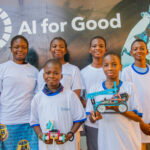
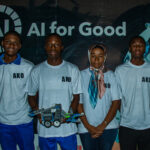
 Youth zone
 In-person

Robotics for Good Youth Challenge Grand Finale 2025

The Robotics for Good Youth Challenge Grand Finale is the prestigious culminating event of the Robotics for Good Youth Challenge 2024-2025, held at the AI for Good Global Summit 2025. Experience the excitement as teams...

Participants

09:00 - 12:15

 Room Q
 In-person
Workshop

AI innovation for early warnings for all: Bridging gaps, saving lives

This workshop, hosted by the AI Sub-Group of the Early Warning for All (EW4All) initiative, will serve as a platform to highlight AI driven innovations that enhance early warning systems for disasters and extreme weather...

See 29 more

09:00 - 17:15

 Room U
 In-person
Workshop

AI and Machine Learning in communication networks

This workshop marks the 3rd edition of the MLComm series, continuing the exploration of AI/ML in modern communication networks. As networks evolve towards IMT-2030 (6G), AI/ML is transforming telecom architectures, enabling distributed intelligence, AI-native operations,...

09:00 - 17:15

 Room V
 In-person
Workshop

Innovate for impact: The winning AI use cases

Artificial intelligence (AI) holds great potential to benefit society but realizing the technology’s full potential needs understanding of not only use case specific requirements but also regional preferences. Rapid strides in AI research, brings forth...

See 76 more

09:00 - 12:15

 Room R
 In-person
Workshop

AI & virtual worlds: Building the cities and governments of tomorrow

AI and virtual worlds are transforming how cities and governments operate, deliver services, and connect with people. This workshop brings together leaders, policymakers, and innovators to explore how AI-powered virtual worlds and the citiverse can...

See 21 more

09:00 - 12:15

 Room T
 In-person
Workshop

Developing responsible AI: Vision and practice

Amidst accelerating advancements in AI and growing disparities in digital access, the World Internet Conference (WIC) is going to convene a multidisciplinary coalition—including members of WIC Specialized Committee on AI, delegates from International standards bodies,...

See 12 more

09:00 - 17:00

 Youth zone
 In-person
Workshop

Prototypes for tomorrow: FuturePitch!

With FuturePitch, we empower students and educators to engage with sustainability, innovation, and product development in a hands-on, creative, and AI-supported way. In this two-level workshop, participants tackle real-world challenges. In the first part of...

09:00 - 17:00

 Youth zone
 In-person
Workshop

Hands-on AI: How does AI really work?

At the EPFL booth, young adults will be introduced to machine learning, neural networks, and data processing. Through three different experiments, they will explore how AI works today. This hands-on approach puts you at the...

09:00 - 11:00

 Youth zone
 In-person
Workshop

Learn to Speak AI: Everyday AI with a practical focus

This short, beginner-friendly course introduces the core principles of AI, with no prior experience required. You will explore what AI is, how it affects our daily lives, and practical applications and considerations. Through interactive lessons...

09:00 - 17:00

 Youth zone
 In-person
Workshop

Robotics for humanitarian demining

This interactive workshop immerses participants in the critical mission of humanitarian demining, using robotics to simulate the safe retrieval and delivery of essential supplies in mine-contaminated zones. Inspired by real-world operations, attendees will navigate challenging...

09:30 - 16:30

 Youth zone
 In-person
Workshop

E3bot: The AI educational robot

This 45-minute session offers a hands-on introduction to the E3bot, an educational robot developed for the CogLabs program by Google and UNESCO to make STEM and AI learning accessible and engaging. Participants will work in...

09:30 - 09:50

 Solutions stage
 In-person
Panel

09:30 - 12:00

 Hall 4
 In-person
Networking

Robotic speed networking

Scheduled flight destinations on the UFO, by Ufotech of Switzerland Book a UFO flight and meet people out of this world! Two collaboration flight destinations are described below, each featuring two distinct participant categories that...

09:30 - 16:30

 AI Art Gallery
 In-person
Networking

Agentic voicing natures by Harry Yeff and ElevenLabs

Agentic Voicing Natures is a groundbreaking AI-driven art installation that gives voice to ecosystem data and nature archetypes in ways never before possible. Created by Grammy-winning new media artist Harry Yeff in collaboration with audio research company...

09:30 - 09:50

 Frontier stage
 In-person
Keynote

Mind over machine: When AI listens to your thoughts

Sending a message, speaking aloud, playing a game, or moving a prosthetic just by thinking. What once sounded like science fiction is now becoming reality, thanks to brain-computer interfaces (BCIs). These groundbreaking systems decode brain...

10:00 - 10:20

 Centre stage
 Online & In-person
Keynote

AI and climate change: Balancing innovation and sustainability

The speaker will discuss how to harness AI's immense potential for helping fight the climate crisis while keeping its environmental impacts in mind.

10:00 - 10:45

 Youth zone
 In-person
Workshop

AI in Motion: Machine Learning with Micro:bit

Discover how artificial intelligence and machine learning work by creating your own AI model using the BBC Micro:bit. Participants will train a model using motion data from their own movements, then run it directly on...

10:00 - 10:45

 Youth zone
 In-person
Workshop

Games for a different approach to artificial intelligence

Take part in a fun, collaborative workshop to explore artificial intelligence through a selection of serious games designed for students aged 10 to 15. Tested in the classroom, these games tackle AI from a variety...

10:20 - 10:40

 Centre stage
 Online & In-person
Keynote

Agentic AI for regenerative and socially just planetary stewardship

I’ll be unveiling GaiaGraph—our agentic AI-powered decision intelligence framework designed not for domination, but for regeneration and justice. GaiaGraph isn’t just another knowledge graph. It’s a living, evolving epistemic engine that fuses imprecise probability, possibilistic logic,...

10:30 - 10:50

 Frontier stage
 In-person
Keynote

AI for global brain health: Scaling non-invasive neuromodulation for Alzheimer’s disease

As neurodegenerative diseases rise worldwide, the need for scalable, accessible, and effective treatments has never been more urgent. This session will explore the possibilities of neuromodulation, specifically activating gamma brainwave activity to develop a new...

10:40 - 11:00

 Centre stage
 Online & In-person
Keynote

AI in Africa: Beyond the algorithm

This urgent and deeply personal keynote reframes AI as a defining force that can either reinforce global inequality or ignite a new era of liberation. Drawing on a legacy of resistance, it exposes the emerging...

10:45 - 12:45

 Youth zone
 In-person
Workshop

Candli: How to create video games from students’ drawings

Candli is a platform for learning programming, mathematics, and physics by creating video games from your own drawings. Candli is a unique combination of artistic creation and visual programming. With this tool, a child, without...

10:50 - 11:10

 Solutions stage
 In-person
Panel

Connection as the foundation: How AI can build bridges

AI has the potential to solve some of the world’s most pressing challenges—but only when it starts with people at the center. In this session, Cameron Kruse, Director of Digital Technology at Bridges to Prosperity,...

10:50 - 11:10

 Frontier stage
 In-person
Keynote

Enophones: Unlocking music’s neuroadaptive potential

With ever increasing cognitive demands in both professional and personal environments, the ability to maintain sustained attention, mental clarity, and emotional regulation is becoming a critical skill set. At ENO, we are pioneering real-time neuroadaptive soundscapes through...

11:00 - 11:45

 Youth zone
 In-person
Workshop

Moon Health Challenge: M.A.R.S Rover

Join a space mission with the M.A.R.S Rover, a mobile, autonomous, robotic system inspired by NASA’s Curiosity rover and the BBC Microbit. Through building, coding, and global challenges-based problem solving, participants will explore robotics and...

11:00 - 11:20

 Centre stage
 Online & In-person
Keynote

Embracing AI for Good: Insights and practices

As a driving force behind the new wave of technological revolution and industrial transformation, artificial intelligence (AI) is profoundly reshaping global economic and social development, as well as human civilization. China Telecom actively embraces AI,...

11:00 - 12:30

 Youth zone
 In-person
Workshop

Invisibility cloak: Foundations of computer vision

The Invisibility Cloak Workshop is a hands-on, beginner-friendly introduction to computer vision, a fundamental area of artificial intelligence and robotics. This workshop uses green screen technology and is designed to make advanced tech topics fun,...
11:10 - 11:30

 Frontier stage
 In-person
Keynote

AI for global health: Autonomous biomanufacturing for living medicines

In a world striving for healthier lives and longer lifespans, the intersection of AI and regenerative medicine offers unprecedented possibilities. This presentation will showcase how AI-powered, autonomous biomanufacturing technology is poised to transform the production of...
11:10 - 11:30

 Solutions stage
 In-person

Protecting trust in crisis: AI in humanitarian information ecosystems

Artificial Intelligence is rapidly reshaping how we understand and respond to information in humanitarian contexts. From detecting misinformation to moderating harmful content, AI presents powerful tools—but it also carries significant weaknesses and risks. Poorly contextualized...

11:20 - 11:40

 Centre stage
 Online & In-person
Keynote

Quantum for Good: Shaping the future of quantum – What happens next?

Clear policies, strong frameworks, and a skilled workforce are essential for quantum technologies to reach their full potential, but what comes next? This session serves as a strategic wrap-up with key insights on next steps....

11:30 - 12:00

 Solutions stage
 In-person
Panel

11:40 - 12:00

 Centre stage
 Online & In-person
Panel

Crafting a well-balanced, pro-innovation regulatory framework

As artificial intelligence reshapes economies and societies, nations without legacy regulatory frameworks face both a rare opportunity and a profound responsibility. In this fireside chat, DLA Piper explores what it means to build AI regulation...

12:30 - 13:45

 Room X
 In-person
Invitation only
Networking Lunch

AI Skills Coalition partners lunch

Participants

See 56 more

12:45 - 13:30

 Youth zone
 In-person
Workshop

What do students learn about artificial intelligence at school?

Artificial intelligence (AI) is not yet explicitly mentioned in the digital education curriculum, but it is already establishing itself as a key object for understanding the contemporary digital world. This workshop explores how classroom activities...

13:00 - 13:15

 Frontier stage
 In-person
Keynote

Empowering ability through AI-powered assistive technologies

This session will explore how AI is transforming assistive technologies and tools to enhance independence, mobility, and quality of life for people with disabilities. Developed at the Human Engineering Research Laboratories (HERL), these innovations integrate...

13:00 - 13:45

 Youth zone
 In-person
Workshop

AI in practice: How to develop AI models that teach you various folks dances of the world?

Create your own AI model that can control Dancing Robots. Participants will train a model using motion data (body postures, face mesh and hand pose), then run it directly on the Tweak Robot. The dances...

13:00 - 13:50

 Leaders lounge
 In-person

The flight of creative process: Erland Cooper on birds, memory, value and music in an age of AI

In this conversation, Scottish composer Erland Cooper joins Pascale Davies, multimedia journalist at Euractiv, for a lyrical and thought-provoking exploration of creativity, technology, and the natural world. Known for his immersive and often experimental compositions...

13:15 - 13:35

 Frontier stage
 In-person
Keynote

Agents of change: A 7 year old’s lens on Generation AI for good

Imagine a world where advanced bionic solutions are not a luxury but a lifeline available to anyone, anywhere. In this keynote, a 7-year-old technologist, global AI author, and Asia’s youngest TEDx speaker takes the stage...

13:30 - 14:30

 Solutions stage
 In-person
Panel

Navigating AI governance in Africa: Shared experiences in policy development

This interactive session brings together policymakers, researchers, and practitioners who have been at the forefront of developing AI strategies across African nations. As artificial intelligence rapidly transforms economies and societies globally, many developing countries are...

13:30 - 14:30

 Youth zone
 In-person
Workshop

Discover educational tools with AI

The Testbed program offers Swiss public schools in cycles 1-3 the opportunity to test and evaluate digital tools free of charge and without obligation. To date, we offer 16 tools (catalog available here: https://www.edtech-collider.ch/testbed/#tests), and we...

13:35 - 13:50

 Frontier stage
 In-person
Keynote

Homo Cyberneticus: Neural embodiment of artificial limbs

To successfully design devices for the human body, engineers often view the body itself as the ideal design template. Similarly, for individuals missing a limb, the development of artificial prosthetic limbs often centres on embodiment...

13:50 - 14:05

 Frontier stage
 In-person
Keynote

The third thumb: Rethinking human dexterity

Dani Clode, augmentation designer, explores how wearable technology can move beyond restoration, toward extension, adaptability, and new expressions of the human body. Her work challenges conventional boundaries between prosthetics, tools, and the body, proposing augmentation...

14:00 - 17:15

 Room R
 In-person
Workshop

The role of GeoAI and Foundational Models in shaping an AI-driven future for all

As the global community works to solve global challenges, innovative geospatial solutions are increasingly recognized as essential tools for addressing complex societal challenges. This workshop will focus on the transformative potential of GeoAI and foundational...

14:00 - 16:00

 Room Alpha
 In-person
Workshop

Agents of change: Executive briefing on AI innovation for global impact

This high-level executive briefing is designed for senior leaders shaping global agendas. Engage with leadership perspectives, impactful case studies, and interactive roundtable discussions tailored for fostering collaboration. Participants will gain firsthand insight into how pioneering...

14:00 - 14:45

 Youth zone
 In-person
Workshop

How do computers work? (with Turing Tumble)

Experience how computers function without screens or code using Turing Tumble, a mechanical computer powered by marbles. Participants will solve logic puzzles, explore how circuits and logic gates operate, and build a deeper understanding of...

14:00 - 15:30

 Youth zone
 In-person
Workshop

Invisibility cloak: Foundations of computer vision

The Invisibility Cloak Workshop is a hands-on, beginner-friendly introduction to computer vision, a fundamental area of artificial intelligence and robotics. This workshop uses green screen technology and is designed to make advanced tech topics fun,...

14:05 - 14:25

 Frontier stage
 In-person
Keynote

Towards the industrial application of LLM: Selection and enhancement of foundation models

This report presents the advancements made by China Unicom in addressing real-world challenges during the industry-wide implementation of large models, including the establishment of a quantitative benchmark for model capability boundaries to resolve the model-selection...

14:15 - 17:15

 Room Beta
 In-person
Workshop

Global AI convergence: Innovative practices for a shared sustainable future

In order to pool global wisdom and explore technological development and international cooperation in artificial intelligence (AI), the China Branch of the BRICS Institute of Future Networks (BIFNC) will host the seminar titled “Converging Global...

See 11 mor

xxxxLam Kwok Yan

Lam Kwok Yan

Professor of Computer Science, College of Computing and Data Science, Nanyang Technological University Singapore


15:40 - 16:00

 Solutions stage
 In-person

Keynote

16:05 - 16:20

 Centre stage
 Online & In-person
Keynote

From learner to leader: A real story of success in the AI Skills Coalition

As we advance AI development, there is a large number of the world's population who do not have access to the internet. This session talks about the importance of AI inclusion, how it affects human...


09:00 - 17:15

 Room U
 In-person
Workshop

xxx

Ya-Qin Zhang

Dr. Ya-Qin Zhang is Chair Professor of AI Science at Tsinghua University, and Dean of Institute for AI Industry Research of Tsinghua University (AIR). He was the President of Baidu Inc. from 2014 to 2019. Prior to Baidu, Dr. Zhang was a Microsoft executive for 16 years with different key positions, including Managing Director of Microsoft Research Asia, Chairman of Microsoft China, and Corporate Vice President and Chairman of Microsoft Asia R&D.

Dr. Zhang was elected to the Chinese Academy of Engineering (CAE), the American Academy of Arts and Sciences (AAA&S), the Australian Academy of Technology and Engineering (ATSE), the National Academy of Inventors (NAI), and the Euro-Asia Academy of Sciences. He is a Fellow of IEEE and CAAI. He is one of the top scientists and technologists in digital video and AI, with over 500 papers, 60 granted US patents, and 11 books. His original research has become the basis for start-up ventures, new products, and international standards in digital video, cloud computing, and autonomous driving.

He serves on the Board of Directors of four public companies. He is on the industry board of United Nation Development Program (UNDP), and AI global council of the Davos World Economic Forum. He is the Chairman of world’s largest open autonomous driving platform “Apollo” alliance with over 200 global partners. He has been an active speaker in global forums including APEC, Davos, United Nations, and Bo’Ao Asia Forum.

  • Organization
    Tsinghua University
  • Profession
    Chair Professor