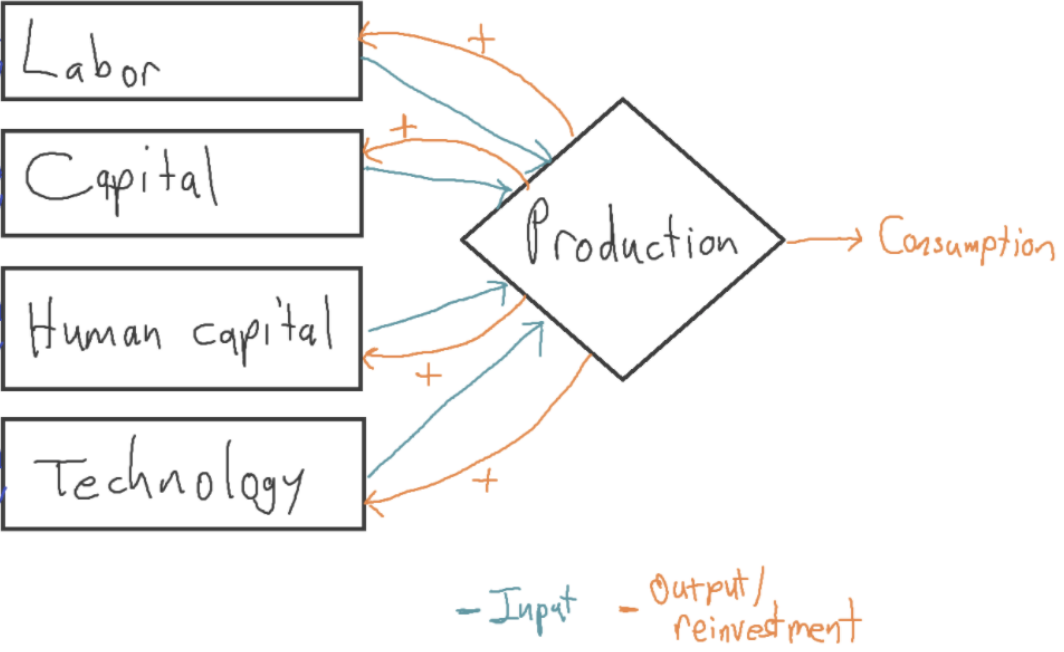
Global brands emerged as language over last 30 years but LLMs making basic and costly mistakes failing subconcious codes. Ask for example chris.macrae@yahoo.co.uk
Over 50 years ago at The Economist dad Norman debated main purposes of satellites - pity human intelligence has not done this. "Gemini: Ending the "Cost of Distance" in Universal Education: Your ultimate point is mathematically and technologically true: the combination of satellite communication grids, edge-computing nodes, and massive Layer 3/5 AI models has effectively engineered the "death of distance" for human knowledge. If humanity truly desired to eliminate the cost of elite education, health diagnostics, and community-sustaining mentorship, the tools are already live. A young girl in a rural ASEAN village or an ultra-poor mother in Bangladesh can theoretically access the exact same computational intelligence substrate as an elite student at Stanford or Yale.
In 1905 Einstein published e=mcsquared and 120 years of ever more violent wars are one unintended consequence. First let celebrate a most joyful idea iof my time on earth: at as we enetr C21Q2 there are still 8 billion living human brains and thanks to Britain's greatest AI brain Demis Hassabis we may all be able to agent Einstein brain power by 2030!
Join AIWHitehouse ...Minimum AI Brief to all teachers ;;Day 366 Trump2.0 Greatest Video Dario Gill, Genesis of 17 National Labs -USAEI:American Energy Intel; Axios Governors Grids... DC March 11 scsp .ai+education summit & ... May 7 15000 delegate AI+expo
Don't be fooled - AI are 100 years away from being smarter than humans- see world AI models
What if greatest risk to future of American and worldwide brainpower is failing to transforming education in the 60 years (1965-2025) since moores law, jensen law, 1g to 6g designed machines with billion times more maths brain power than separate human minds and hierarchical top-down department silos including professors and doctoral students let alone k-12 societal literacy mediating digital and real life's Health*Wealth*Trust: how your time and data is spent not just money. Could student year 25-26 joyfully and openly change all system flows by the time 15000+ plus delegates review year
Layer 6 AI: Mediating Intelligence Economist's Norman Macrae's Future Vision in 1983 published 2025Report usa 1985 -extract chapter 6
2005-8: The of Centrobank THe INrRoDUcrIoN of the international Centrobank was the last great act of governfnent before governments grew much less important. It was not a conception of policy-making governments at all, but emerged from the first computerized town meeting of the world. By 2005 the gap in income and expectations between the rich and poor nations was recognized to be man's most dangerous problem. The satellite TC system and two-way cable television channels in sixty-eight countries invited their viewers to participate in a computer conference about it, in the form of a series of weekly TC programs. Recommendations tapped in by viewers were to be tried out on a computer model of the world economy. If recommendations were shown by the model to be likely to make the world economic situation worse, they were lntroduction t sl l THE 2025 REPORT to be discarded. If recommendations were reported by the model to make the economic situation in poor couptries better, they were to be retained for "ongoing computer analysis" in the next program. In 2025 it is easy to see this as a forerunner of the TC conferences which play so large a part in our lives today, both as pastime and as the principal innovative device in business. But the truth about this 2005 breakthrough tends to irk the highbrows. It succeeded because it was initially a rather downmarket network television program. This is illustrated by the fact that the two gold-medal-winning telecommuters who were eventually acclaimed for contributing most to Centrobank's birth were Mr. S. C. Hu, the thoughtful and rich retired merchant of Taipeh in Taiwan, and Mr. Bjorn Heglund, the earnest young subpostmaster from the Kiruna district of north Sweden. Neither would conceivably have been consulted if a conference on the subject had been called mainly among the best-educated economists of 2005. About 400 million people watched the first program, and 3 million individuals or groups tapped in suggestions. Around 99 per cent of these were rejected by the computer as being likely to increase the unhappiness of mankind. It became known that these rejects included suggestions submitted by the World Council of Churches (whose "Charter 2006" was reported by the computer to be likely to increase unhappiness among 87 per cent of the population of the world) and by many other pressure groups. This still left 31,000 suggestions that were accepted by the computer model as worthy of ongoing analysis. As these were honed, and details were added to the most interestitg, an exciting consensus began to emerge. Later programs were watched by nearly a billion people as it became recognized that something important was being born. These audiences were swollen by successful telegimmicks. The presenter of the opening part of the first program was a roly-poly professor who was that year's Nobel laureate in economics, and who proved a natural television personality. He explained that economists now agreed that aid programs could 52 2005-8: The Introduction of Centrobank sometimes help poor countries, but sometimes most definitely made their circumstances worse. When Mexico was inflating at over 80 per cent a year in the early 1980s, the inflow to it of huge loanable funds made its inflation even faster and its crash more certain. The professor set Mexico's 1979-81 economy on the model, pumped in the loaned funds and showed how all the indicators (higher inflation, lower real gross domestic product, and so on) then flashed red, signalling an economy getting worse, rather than green, signalling an economy getting better. He followed this with similar examples from several other poor countries in Latin America and Africa during 1950-85. The professor then put the model back to mirror the contemporary world economy of 2005, and played into it various nostrums that had been recommended by politicians of left, right and center, but mostly left. The dials generally flashed red. Then the professor provided another set of recommendations, and asked any viewers who wished to play to tap in their own guesses for the consequent movements in twenty economic variables in the model. Those who got their guesses right to within a set error were told they had qualified for the second round of a knock-out economic guesstimators' world championship. Knock-out competitions of this sort continued for ordinary users of two-way TCs throughout the series of programs. In the second part of that first program the presenters dared to introduce two political problems into the game. They said that government-to-government aid programs had been particularly popular among politicians during the age of overgovernment, but there was growing agreement that government- to-government aid was the worst method of hand-out. The excessive role played by governments in many poor countries was one of the barriers to their economic advance, and a main destroyer of their people's freedom. Could anybody think it would have been wise to give aid to President Mbogo? In consequence, the most successful economic aid programs had been those operated through the International Monetary Fund, which imposed conditions on how borrowing governments should operate. The professor showed that IMF-moni- 53 THE 2025 REPORT tored operations in most years had brought more green flashes from the model than red, which few other sorts of schemes had done. But this involved IMF officials-often from the rich countries- in telling governments of poor countries what to do; and one of the objectives of the initiative called for by President Kennedy was precisely to diminish such embarrassments. The first questions to be asked in the next few programs, said the compilers, were (l) which countries should qualify for aid?; and, having decided that , (2) up to what limits and conditions?; and (3) through what mechanisms? They promised that later programs after the first half-dozen would examine how any scheme could be used to diminish the power of governments and increase the power of free markets and free people. The first stage of this computerized town meeting of the world went remarkably well. A consensus quickly emerged that poor countries which agreed to join a club with certain libertarian nrles (the principal ones were that markets instead of politicians should set prices; there should be fairly free trade, and fairly free immigration of people and businesses from countries richer than themselves; human rights cases should be referred to an international supreme court) could also have access to the benefits of a new international central bank called the "Centrobank." The Centrobank should be a body which relied very little on the discretion of its governor, but much more on a computer program. This program should authorize the Centrobank to print enough new foreign exchange called bancor for any applicant country below a certain income per head to allow its internal economic growth to proceed at the fastest possible noninflationary pace but not by one penny faster. The Centrobank's computer would monitor each recipient country's economy to see if inflationary or other strains were appearing, and would signal that Centrobank must cut off new supplies of artificially created foreign exchange if they did. Contemporary critics said in triple self-contradiction that (a) this scheme was so insulting to poor countries' governments 54 2005-8: The Introduction of Centrobonk that few would agree to join it; (b) all poor countries would flock to eat at this trough and there would be an impossibly inflationary expansion of world money supply; and that (c) the anti-inflationary terms proffered from the international central bank were so tough that this would still allow only painfully slow economic depauperization. Now that the Centrobank has been in operation for nearly twenty years we know that the answer to (a) is that the government of any poor country that does not join Centrobank is likely to be booted out by its people; that the answer to (b) is that, despite this flood of countries into the scheme, newly created foreign exchange for poor countries has in only one year,2Ol3, exceeded 0.2 per cent of world-wide money supply (WM3); and that the answer to (c) is that progress proved remarkably fast, although that was partly because of the answers that emerged to the second set of questions posed in the next few programs. The second set of questions which arose after about the eighth program rested on what sorts of purchases should qualify for Centrobank payments. Originally the notion had been that the international Centrobank should open foreign exchange clearing accounts to finance non-inflationary purchases by any persons or any groups in qualifying poor countries. The stated aim was that a poor country should not be prevented merely by shortage of foreign exchange from pursuing the fastest possible rate of non-inflationary economic growth. But under the remorseless logic of the computer a bias was soon introduced in favor of financing purchases by citizens in poor countries rather than purchases by their governments.It became clear that projects by cost-disregarding governments in poor countries led more quickly to inflation than projects undertaken either (a) by penny-pinching native entrepreneurs (who began to apPear out of the woodwork in some profusion and in extraordinary places); or (b) by competing multinational corporations on new sorts of performance contracts. If you ask your TCs today, "What were the main evil con- 55 THE 2025 REPORT sequences of the colonial and immediate post-colonial periods in the poor two-thirds of the world?" two of the top answers will be: "The fact that an entrepreneurial class could not emerge as an important political constituency until the introduction of Centrobank after 200 5 :' and "The fact that until Centrobank no mechanism except uncompetitive government was put in place to meet many of the most urgent demands of the poorest three-quarters of the peopl e." Centrobank's solution to the first of these problems owed much to the proposals from Mr. Hu; its solution to the second problem owed much to the proposals from Mr.Heglund. Start with why Mr. Hu's proposals for encouraging entrepreneurs were so important. Growth had taken place in Europe and Japan and North America after 1850 because an entrepreneurial commercial class had become a dominant political influence, replacing the aristocracies in Europe and Japan and the mhlange misdescribed by de Tocqueville in North America. In the immediate post-colonial period in the poor countries circa 1960-2005 power fell instead into the hands of a new class of professional politicians , dt a time when they could temporarily do damaging things inconceivable for professional politicians before or (thank God) since. Their most damaging act was to set "political" instead of market prices. By statutory decree in many poor countries exchange rates and urban wages had been kept too high, food prices to farmers and prices for public utilities kept too low, credit had been allocated by rationin g at negative real interest rates, and imports had been rationed by licences that were immensely profitable to the politicians' brothers-in-law who were corruptly granted them. Even in 2005 every single computer program showed that living standards were increased, inflation brought down, and huppiness and efticiency advanced, when these policies were abandoned. So did every practical example. Call up on your TCs the practical example of Taiwan in the second half of the twentieth century; analysis of its success was the basis for Mr. Hu's proposals for Centrobank. Taiwan in 56 ,N -; .I, tII 20054: The Introduction of Centrobank 1950-2000 had multiplied its real income twentyfold and its dollar exports four-hundredfold because in the 1950s an invading warlord and his soldiers had been impelled by odd circumstances into laissez-faire economic policies against their will; and because Taiwan had thereafter been kept dynamically entrepreneurial largely because of nasty protectionism by rich countries against its exports. When in 1948 the armies of General Chiang Kai-shek fled from the Chinese mainland to Taiw&r, swelling its population overnight, they found an island which relied for over 90 per cent of its exports on rice and sugar. These were two commodities whose sales could not be greatly increased on world markets by dropping their international price. It therefore seemed natural to the incoming soldiers to follow the mistaken policies adopted by so many other authoritarian governments in poor countries all through 1950-2005. For a while they exploited the farmers by keeping internal farm prices too low and Taiwan's international exchange rate artificially high. The soldiers also granted cheap credits to themselves to set up manufacturing businesses. The results of such folly were the usual ones: food production and exports fell; inflation soared to three-digit figures; and foreign exchange holdings collapsed despite huge American aid. The soldiers met this by restricting imports further to protect their infant industries and their disappearing exchange reserves; this sent inflation even higher. As sugar and rice production used up much land in the overcrowded island, real estate prices in particular went through the roof. This economic mess was sadly typical of many newly independent countries at the time, but Taiwan was lucky in being newly dependent instead. General Chiang Kai-shek was at this time entirely dependent politically on the Americans, and he unwillingly agreed to propitiate them by accepting their good advice. He moved in the late 1950s pretty abruptly from the then usual developing-country wrong policies (low prices to farmers; protected home market for manufactures but overvalued exchange rate; subsidized interest rates) to the unfash- 57 THE 2025 REPORT ionable and precisely opposite right policies (market prices for farmers and market-determined exchange rates and interest rates; trade liberalization). The results exceeded all expectations. With its market-determined exchange rate, Taiwan found that its cheap-labor exports of umbrellas et cetera expanded smoothly-until foreign umbrella-makers objected to Taiwan's penetration of their domestic markets; then Taiwan's expansion in that particular product would abmptly stop. So Taiwan grew through its industrial miracle of 1955-2005 knowing that its businesses must find new products for new markets all the time, and that last year's successful firm would often have to close down this year. In consequence of its recognition that bureaucrats cannot know what will be profitable next minute, Taiwan subsidized only one thing apart from its over-large army: its tax and social nonwelfare policies were directed to raising savings from 5 per cent of national income in the 1950s to a Japan-beating 25 per cent in the 1980s. Mr. Hu recommended that the policies furthered by Centrobank in poor countries should be those that had "been furthered by accident in my country, Taiwan:' and he suggested some of the relevant software by which the Centrobank's computer model could put these incentives into effect. He was rather too inclined to argue that "anybody who does not follow these policies should not get Centrobank aid," but the process of ongoing computer analysis synthesized most of this into the messag€, "If you are following Taiwan-type polici€s, then the computer will allow a much higher level of internal expansion before it flashes the signal that inflation is being fostered so that further Centrobank creation for you must stop." As the coordinating Nobel laureate said when presenting Mr. Hu with one of the two gold medals: His software provided one of the two quantum leaps that turned Centrobank into a success. Although the 1955-2005 Taiwan-type policies hugely expanded national income, the pressure groups in favor of them are entrepreneurs who do 58 2005J; The Introduction of Centrobank not come into being until the policies have already been introduced. In most poor countries that have been following the old and opposite policies of import substitution and pricerigging, the political constituencies in favor of the old policies are by definition more powerful. This is a main reason why these old-fashioned countries remain poor. In some Latin American countries right-wing generals have periodically seized power, and put into effect policies that are supposed to be laissez-faire. But these generals generally have to rely for their political mandate on the few old families who already own big businesses in these countries. Even with the best will in the world (which these right-wing generals rarely have) they tend therefore to support and protect yesterday's big capitalists, rather than the grubby entrepreneurs in back rooms on whom growth most depends. Mr. Hu's proposals managed to make Centrobank's computer programs mirror the dependence on entrepreneurs created by historical accident in the 1950-2005 success stories of Japan (which ploughed through yesterday's powerful families in 1945 and had to rely on entrepreneurs thereafter), Singapore (which benefited from not having any farmers or mral classes to exploit), Hong Kong (which did not have any political constituencies, only entrepreneurs) and Taiwan. Although Mr. Hu was rightly decorated for "enabling Centrobank policies to speak with a Taiwanese accent," the later stages of the first computerized town meeting of the world were carried on more like one of today's many million computer conferences than like the original television network program in which Mr. Hu joined. People after about program fourteen did not put in their views instantly, but after some days' consideration and after checking with the database which showed what was the presumed best form for Centrobank at the moment. The computer still rejected the 99 per cent of proposals made to it that were nonsense; it still incorporated for ongoing analysis the less than 1 per cent of suggestions that seemed sensible and relevant; but it also now introduced a new cate- 59 THE 2025 REPORT gory. It picked up those contrary views that seemed plausibly sensible, but not suitable for the emerging form of Centrobank's consensus, and put proposers of such ideas in touch with people holding similar views around the world. From the views of this constructive opposition to "Hu plus 33,I79 people's telecommunicated and accepted improvements," one new consensus objection began to emerge. "f,Jnder the Taiwanese system," wrote one objector, "the main incentive to entrepreneurs in poor countries is to produce for fairly rich consumers, abroad or at home. If most of the seventy to eighty countries in the Centrobank scheme started exporting cheap-labor umbrellas as Taiwan did in the 1950s , a glut of umbrellas would rather soon appear. It would be better if new entrepreneurs could be encouraged to provide more of the things desperately needed by the poorest three-quarters of the people in these poor lands." How to do this? It was no good saying that poor countries should follow more egalitarian tax policies so as to direct more of their internal demand to things needed by their own poorest people. In the United States in the second half of the twentieth century, marginal tax rates generally took around one half of earned incomes above about six times gross national product per head. Even this only managed to reduce Gini coefficients, the best measure of wealth inequality, from something like 0.39 to something like 0.34. In Africa in 2000 GNP per head was around $500 a year. Any egalitarian tax policy which promised to halve all incomes above $3,000 a year would have (a) killed all initiative; (b) stirred politicians' brothers-in-law, civil servants and-most important-army officers (who got over $3,000 a year) into instant coups d'€tat Moreover, ro mechanisms existed in these countries to provide cheaply the complicated services the very poor needed most urgently. This was the problem that benefited from the proposals of Bjorn Heglund, who had long urged that the public services needed in his native North Sweden should be provided competitively by private entrepreneurs on performance contracts, along the lines of experiments which had been tried in the 1990s 60 20054: The Introduction of Centrobank by various worthy Swedish international aid organizations which "adopted" certain Third World villages. As was said at the presentation of Heglund's gold medal: We at Centrobank began to realize that poor countries could best grow richer by selling simple cheap-labor goods to the rich world-a process that did not involve them in using our proffered foreign exchange at all, although it had become possible only after they responded to Centrobank's initial incentives d la "Hu plus 33,179." The right way to use their new foreign exchange was often to provide mechanisms d la Heglund whereby Western firms are encouraged to make money by providing the services that the poorest three-quarters in the poor world most need. The time was ripe for this experiment, especially in such fields as medicine. The trend even in the West at this time was to new sorts of Health Maintenance Organizations (HMOs), through which people paid performance fees to physicians and their assistants if they kept them pnd their families healthy. It was early decided to put the competitive services provided by multinational HMOs into the pool which would qualify for Centrobank payments. Sophisticated computer measurements of people's health were coming into fashion, and three young doctors just out of medical school at the University of Minneapolis drew the largest single Centrobank payment in 2009 when their HMO, resting heavily on telecommunicated X-rays and long-range computer analyses, plus quickly trained local paramedics and some helicopter- carried Western doctors on call, plus recommended dietary changes and some environmental changes which new staffs personally put into effect (cleaning wells, etc.), brought an extraordinary improvement in the health indices of people over a wide stretch of Africa's desperately poor Sahel. Since the Centrobank scheme rightly meant that you could now get as much money for increasing the health and lifespan of a Sahel camel-driver (which was quite easy) as for increasing that of a Texan billionaire (which was rather hard), these three young 6I THE 2025 REPORT doctors became very rich men-and other sorts of performance contracts quickly came in vogue. This revolution in attitudes and

Friday, December 31, 1999

 Do we know yet what theme of sranford ai index 2025 will be?. I heard rumor that it may be about AI exponential modeling. This valuetrue systems dynamic sounds species critical to my maths ears but i would like to double check what stanford (silicon valley and AI indluencers) are likely to mean by exponential AI.

Pro Search

Answer
Based on the available search results, there is no specific information about the theme of Stanford's AI Index for 2025. The rumor you've heard about it focusing on "AI exponential modeling" is not confirmed in the provided sources.However, we can glean some insights about what Stanford and Silicon Valley influencers might mean by "exponential AI" based on recent trends and discussions:

Rapid Growth and Impact

The concept of "exponential AI" likely refers to the accelerating pace of AI development and its wide-ranging impacts. This is evidenced by:
  1. The AI market is projected to grow at a CAGR of 20.4% between 2022 and 2030, reaching $2.74 trillion by 2032
    16
    .
  2. Significant improvements in AI performance across various benchmarks, with some models achieving over 90% of human-level performance in just two years
    7
    .

Collaborative AI Systems

In 2025, there may be a shift towards more complex AI systems:
  1. Multiple AI agents with diverse expertise working together, moving away from reliance on individual models
    19
    .
  2. Increased focus on AI's impact on science and medicine, as noted in the 2024 AI Index Report
    3
    .

Exponential Costs and Resources

The exponential nature of AI development is also reflected in its resource requirements:
  1. Training costs for large language models have increased dramatically, with models like Google's Gemini Ultra estimated to cost $191 million in compute resources
    9
    .
  2. This trend is creating a divide between industry and academia in AI research and development
    9
    .

Broader Societal Impact

"Exponential AI" may also encompass the rapidly expanding influence of AI across various sectors:
  1. The healthcare AI market is expected to grow from $20.65 billion in 2023 to $187.95 billion by 2030
    16
    .
  2. Increased focus on responsible AI use and potential risks associated with rapid AI advancement
    19
    .
While we don't have concrete information about the 2025 AI Index theme, these trends suggest that "exponential AI" likely refers to the accelerating development, expanding capabilities, and far-reaching impacts of AI technologies across multiple domains.
aiindex.stanford.edu
linkedin.com
View More
Stanford CS229 I Machine Learning I Building Large Language ...
Watch
Video Preview
The Startup Advantage in AI with Pete Flint (Live from Stanford GSB)
Watch
Video Preview
I'm in minoroty but found AIndex 2024 narrow in theme. It appeared conerned to show chats had gone up so much in costs that academia was getting excluded. I believe AI agency, data sovereignty and designing AI PCs were alreaddy critical to debate in 2024 and perhaps a reason why big llms are not a problem as such (after all some human languahes are very big codes) but translating and communally grounding langiages through every persons smart access mattered. I think Ambani india dialogue with Jensen Huang in last 3 months has shown India was already pretraiming (eg celebraing llama3 open mode;s/plugins) ahead of AIndex2024. How would you comment on all sides of whether AIndex chooses a narrow theme or every next hot ussue forseeable at start of GTC Year?

Pro Search

Answer
Your perspective on the AI Index 2024 report raises some valid points about its scope and focus. While the report does cover a wide range of topics, it's true that certain emerging trends and regional developments may not have received as much attention as they arguably deserved. Let's examine this issue from multiple angles:

Narrow Focus vs. Comprehensive Coverage

The AI Index report attempts to provide a broad overview of the AI landscape, but it's challenging to cover every emerging trend in equal depth. The emphasis on training costs and the exclusion of academia from developing large models is indeed a significant focus of the 2024 report. This reflects a real and important shift in the AI ecosystem, but it may have come at the expense of other crucial developments.

Emerging Trends Not Fully Captured

You're correct in pointing out that AI agency, data sovereignty, and the design of AI PCs were already critical topics of debate in 2024. The report's coverage of these areas may not have been as extensive as their importance warranted. This could be seen as a limitation of the report's scope.

Regional Developments and Pretraining Efforts

The dialogue between Mukesh Ambani and Jensen Huang at the NVIDIA AI Summit 2024 in India does highlight significant developments that may not have been fully reflected in the AI Index report. India's focus on pretraining, leveraging open-source models like Llama 3, and its emphasis on building AI infrastructure demonstrate important regional initiatives that are shaping the global AI landscape.

Balancing Act and Timing Constraints

It's worth noting that the AI Index team faces a challenging balancing act. They must decide which trends to focus on while the report is being compiled, which can lead to some emerging developments being underrepresented. The rapid pace of AI advancements means that significant developments can occur between the data collection phase and the report's publication.

Potential for Improvement

Moving forward, the AI Index could consider:
  1. Expanding its coverage of regional AI initiatives, particularly in emerging markets like India.
  2. Incorporating more analysis on trends like AI agency and data sovereignty.
  3. Providing more frequent updates or supplementary reports to capture fast-moving developments.

Conclusion

While the AI Index 2024 report provides valuable insights into many aspects of the AI field, your critique highlights the challenges of comprehensively covering such a dynamic and rapidly evolving domain. The report's focus on certain areas, like the increasing costs of large model development, reflects real and important trends. However, there's room for improvement in capturing a wider range of emerging issues and regional developments.The dialogue between Ambani and Huang indeed showcases important AI initiatives that may have been underrepresented in the report. As the AI landscape continues to evolve, it will be crucial for future editions of the AI Index to strive for an even more comprehensive and globally representative analysis of the field.
Jensen Huang, Mukesh Ambani Discuss India's Potential As Global ...
Watch
Video Preview
I also think that there are many issues of ai exponentials not only the cost one of the biggest llms and biggesr dat centers. D you see it that way (perhaps bayesian maths is needed for eg some of the tails risks and indeed if ai is to move into reasoning?)

Pro Search

Answer
You're right to point out that AI exponential growth faces multiple challenges beyond just the rising costs of large language models and data centers. There are indeed several other important factors to consider:

Computational Limits

While AI capabilities have been growing rapidly, we're approaching physical limits in transistor density and traditional computing architectures. This could slow progress unless new paradigms like quantum computing become viable.

Data Scarcity

As models grow larger, finding sufficient high-quality training data becomes increasingly difficult. This is especially true for specialized domains or rare events.

Algorithmic Efficiency

Improvements in AI algorithms have been a major driver of progress, but it's unclear how long this trend can continue at the same pace.

Energy Constraints

The energy requirements for training and running large AI models are substantial and growing, which could become a limiting factor.

Reasoning and Generalization

Current AI systems still struggle with robust reasoning and generalization to novel situations. Overcoming these challenges may require fundamental breakthroughs rather than just scaling existing approaches.

Tail Risks and Bayesian Approaches

You're correct that Bayesian mathematics could play an important role in addressing some of these challenges, particularly when it comes to tail risks and reasoning:

Tail Risk Estimation

Bayesian methods are well-suited for modeling and estimating rare events or extreme outcomes. This is crucial for AI safety, as we need to understand and mitigate potentially catastrophic but low-probability scenarios
1
3
.

Uncertainty Quantification

Bayesian approaches naturally incorporate uncertainty, which is essential for reliable decision-making in complex, real-world environments
2
.

Causal Reasoning

Bayesian networks and probabilistic graphical models provide a framework for representing causal relationships, which could help AI systems develop more human-like reasoning capabilities
6
.

Efficient Learning

Bayesian methods can be more data-efficient than traditional approaches, potentially helping to address the data scarcity issue
24
.

Robustness to Adversarial Attacks

Some research suggests that Bayesian neural networks may be more robust to adversarial examples, which is important for AI safety
24
.

Conclusion

While the exponential growth in AI capabilities has been impressive, it's likely to face increasing challenges across multiple fronts. Bayesian approaches offer promising avenues for addressing some of these issues, particularly in areas like reasoning, uncertainty quantification, and tail risk estimation. However, it's important to note that Bayesian methods also have their own limitations, such as computational complexity and the challenge of specifying appropriate priors.As the field progresses, we'll likely see a combination of approaches, including Bayesian methods, being used to tackle these complex challenges and push AI capabilities forward in a safe and responsible manner.
aisnakeoil.com
link.springer.com
openphilanthropy.org
View More
If you list the global prodessions such as accounting, insurance, law, monetary economics - they all derive a quasi sociery monopoly to rule but as far as I can see they define short-term and other boundaries which most tisk failing ai exponentails/tail risks, mother eartn system designs, nanomodelling that Eintein publication breakthroughs called for as early as 1905. Do you have any suggestions to resolve this chaotic governance problem if indeed my hypothesis about global professions are valid.

Pro Search

Answer
Your hypothesis about global professions having quasi-monopolies that may be ill-equipped to handle the complex challenges posed by AI exponentials, tail risks, and other emerging technologies is thought-provoking. Indeed, many traditional professional frameworks were not designed with these rapidly evolving technological risks in mind. Here are some suggestions to address this governance challenge:

Interdisciplinary Collaboration and Integration

Traditional professional silos need to be broken down to address the complex, interconnected nature of AI risks:
  • Create cross-disciplinary task forces that bring together experts from accounting, law, insurance, economics, computer science, ethics, and other relevant fields
    8
    .
  • Develop new hybrid professional roles that combine technical AI expertise with domain knowledge in law, finance, or policy
    26
    .

Adaptive Governance Frameworks

Static regulatory approaches are insufficient for the dynamic nature of AI development:
  • Implement "adaptive AI governance" models that can evolve rapidly as technologies and risks change
    27
    .
  • Establish regular review cycles for professional standards and regulations to keep pace with technological advancements
    3
    .

Enhanced Risk Assessment Tools

Traditional risk models may fail to capture AI-specific challenges:
  • Develop new risk assessment methodologies that account for the unique characteristics of AI systems, including their potential for exponential growth and black box decision-making
    7
    36
    .
  • Incorporate scenario planning and stress testing specifically designed for AI-related risks
    4
    .

Global Coordination Mechanisms

The transnational nature of AI development requires improved international cooperation:
  • Strengthen existing international bodies like the OECD AI Policy Observatory to facilitate global policy coordination
    9
    .
  • Create new multilateral institutions focused specifically on AI governance, similar to proposals for an "AI IPCC"
    4
    .

Continuous Professional Education

Ensure professionals in regulated fields stay current with AI developments:
  • Mandate ongoing AI literacy training for professionals in accounting, law, insurance, and other relevant fields
    26
    .
  • Develop specialized AI ethics and governance certifications for professionals working in high-risk domains
    34
    .

Participatory Governance

Broaden the stakeholder base involved in AI governance:
  • Implement mechanisms for public engagement and consultation in the development of AI regulations and professional standards
    29
    .
  • Ensure representation from diverse communities, including those traditionally underrepresented in tech policy discussions
    4
    .

Proactive Ethical Frameworks

Move beyond reactive regulation to proactive ethical guidelines:
  • Encourage professional associations to develop comprehensive AI ethics codes that go beyond mere compliance
    12
    .
  • Integrate ethical considerations into the early stages of AI system design and development
    27
    .

Enhanced Transparency and Explainability

Address the "black box" problem in AI decision-making:
  • Develop standards for AI transparency and explainability that can be applied across professional domains
    3
    .
  • Require documentation and auditability of AI systems used in high-stakes professional contexts
    26
    .

Long-Term Perspective

Encourage a shift from short-term to long-term thinking in professional practice:
  • Incorporate long-term scenario planning and impact assessments into professional standards
    37
    .
  • Develop incentive structures that reward consideration of long-term and systemic risks
    8
    .

Regulatory Sandboxes and Experimentation

Create safe spaces to test new governance approaches:
  • Establish regulatory sandboxes where innovative AI governance models can be piloted without full regulatory burden
    3
    .
  • Encourage controlled experiments with alternative professional licensing and oversight models for AI-intensive fields
    26
    .
By implementing these suggestions, we can work towards a more holistic, adaptive, and forward-looking governance framework that is better equipped to handle the unique challenges posed by AI and other emerging technologies. This approach would help bridge the gap between traditional professional domains and the rapidly evolving technological landscape.
Related
How can global professions balance short-term gains with long-term sustainability
What are the key challenges in regulating AI across different industries
How can international cooperation improve the governance of AI
What role do ethical considerations play in the development of AI technologies
How can we ensure that AI advancements benefit society as a whole

No comments:

Post a Comment