Today thanks to Gen AI, you too can be lifelong student & teacher of good - try asking chatgpt for a lesson plan on any grade on any livelihood skill you'd like to learn, teach or celebrate. Here come some rehearsals on water ai's love of humans. march 22-24 sees the UN NY host first hq water/sanitation summit in nearly 50 years - we asked chatgpt some prep questions If asked to teach a 9-year old a first lesson on sdg 6 water/sanitation, what water intelligence or actions would you share with her? Great question! Here are some water intelligence and actions that you can share with a 9-year old on SDG 6 water and sanitation: 1 What is SDG 6? Explain to the child that SDG 6 is a global goal that aims to ensure everyone has access to clean water and sanitation by 2030. You can also use this opportunity to introduce the other SDGs and explain how they all work together to create a better world for everyone. 2 Why is clean water important? Explain to the child that clean water is essential for survival, and that it helps keep people healthy and safe. You can also discuss the different ways that water is used in our daily lives, such as for cooking, cleaning, and drinking. 3 Where does our water come from? Discuss with the child where the water in your community comes from, whether it's from a river, lake, or groundwater source. You can also explain how water is treated to make it safe to drink. 4 How can we conserve water? Talk about the importance of conserving water and some simple actions that the child can take, such as turning off the faucet while brushing their teeth, taking shorter showers, and fixing any leaky faucets. 5 What is sanitation? Explain to the child what sanitation is and why it's important. You can discuss how proper sanitation helps prevent the spread of diseases and can improve overall health and wellbeing. 6 How can we improve sanitation? Talk about some simple actions that the child can take to improve sanitation, such as washing their hands regularly with soap and water, properly disposing of waste, and using a toilet instead of open defecation. 7 How can we help others access clean water and sanitation? Discuss with the child how they can help others who may not have access to clean water and sanitation. This could involve volunteering or donating to organizations that work to improve water and sanitation access around the world. Remember to use language that is age-appropriate and engage the child in conversation to ensure they understand the importance of clean water and sanitation. if asked to teach a 15 year old male a first lesson on sdg 6 water/sanitation. what water intelligence or actions would you share with him? Great question! Here are some water intelligence and actions that you can share with a 15-year old male on SDG 6 water and sanitation: 1 What is SDG 6? Explain to the teenager that SDG 6 is a global goal that aims to ensure everyone has access to clean water and sanitation by 2030. You can also use this opportunity to discuss the broader context of global sustainability and why it is important to work towards achieving these goals. 2 Water scarcity and pollution: Discuss the issues of water scarcity and pollution, and how they impact people's lives and health. You can also explore the various causes of water pollution, such as industrial waste, agricultural runoff, and plastic waste, and discuss the importance of reducing our water usage and properly disposing of hazardous waste. 3 The importance of clean water and sanitation:Explain to the teenager that access to clean water and sanitation is a basic human right, and that it is essential for good health, hygiene, and economic development. You can also discuss the links between water, sanitation, and gender equality, as girls and women are often disproportionately affected by lack of access to clean water and sanitation facilities 4 Innovative solutions :Explore some of the innovative solutions that are being developed to address water scarcity and pollution, such as rainwater harvesting, water-efficient agriculture, and water treatment technologies. You can also discuss the importance of involving local communities in designing and implementing these solutions. 5 Taking action : Encourage the teenager to take action to help promote clean water and sanitation. This could include supporting local initiatives, reducing their own water usage, and advocating for policies and practices that promote water conservation and environmental sustainability. Remember to use language that is age-appropriate and engage the teenager in conversation to ensure they understand the importance of clean water and sanitation, and how they can contribute to achieving SDG 6. ====== which are the most urgent diverse intelligence challenges faced by different peoples and nations? There are several urgent water intelligence challenges faced by different peoples and nations, some of which include: 1 Water scarcity: Many regions around the world are facing water scarcity, which is only expected to worsen with climate change. Water scarcity can lead to conflicts over water resources and can impact food security, as well as the health and well-being of communities. 2 Water pollution: Water pollution can be caused by a range of factors, including industrial activities, agriculture, and improper waste disposal. Pollution can make water unsafe for human consumption and harm aquatic ecosystems, which can have far-reaching impacts on the environment and public health. 3 Inadequate sanitation: Lack of access to proper sanitation facilities can lead to the spread of disease and infections, particularly in areas with high population density or limited resources. In many developing countries, a significant portion of the population does not have access to proper sanitation facilities, which can have devastating consequences for public health. 4 Climate change: Climate change is expected to exacerbate many of the water intelligence challenges faced by different peoples and nations, including water scarcity, water pollution, and extreme weather events such as floods and droughts. 5 Aging water infrastructure: Many countries around the world are facing challenges with aging water infrastructure, which can lead to leaks, water loss, and contamination. Upgrading and maintaining water infrastructure is critical to ensure reliable access to clean and safe water. 6 Unequal access to water resources: In many regions, access to water resources is unequal, with some communities having greater access to water than others. This can exacerbate existing inequalities and contribute to conflicts over water resources. These challenges require urgent attention and action from governments, communities, and individuals around the world to ensure access to clean and safe water for all. |
Sunday, March 5, 2023

Saturday, March 4, 2023
x


XDAI17 – Xponetial Decentralise A Intel 17 = UN2
SDGs
Millennial Livelihoods Education Plan ask
In population terms m SHELF human development empowering a billion rural women in tropical asia to end poverty is the greatest economic miracle (as far as keynesian and scottish/smuthian are concerne0
|
Bn Last mile livelihoods |
Bn Green Livelihoods |
Bn Good tech Livelihoods |
Co-creative society and good media |
||||
|
S5he-too H3ealth E4du L17*1end pov F2ood See top 30 cooperations – 1 billiongirls.com |
6 WATER & sanitation |
9 I N F R A S T R U C T |
10
i N E Q U A Ll TY RED ICE
|
11 City Rural S U S T A I N |
12 R E S P O S I B L E C&p |
16&15 peace & land-life |
911 maths 911 music 911 celebrities sports fashion 911 new hi-trust professions 911 metaverse last chance design media for ed
not media for control/fake etc (all 3 previous media wbeb2, web1 , tele age designed by (accidentally) devaluing millennials generation first sustainability |
Mandela's wide once described Bangadesh's capital as the open university of microcredit - it would have been simpler to call it open university of shelf microeducation SHELF corresponds to the 5 deepest SDGS -S for goal 5 she-too nation building, H for goal 3 last mile health services; E for goal 4 livelihood education for all ages; L =leadership platforms/partnerships for intergenerational investment in ending poverty, F for goal 2 last mile Food security. You can see top 30 cooperations of SHELF at abedmooc.com - we have curated 6 cooperations for each of these 5 deepest goals. Some important context nuances:
from birth of 8th most populous (poorest)nation 1971, bangladesh rural advancement committee was designed to serve the 90% of the population who were rural without access to electricity grids. The national government had barely enough taxes to look after security and the 10% living in cities. Abed who founded brac had been regional ceo for royal dutch shell as well as chartered accounatnt and Glaswegian shipping architect- he valued transparent Snithian business models and he where economic miracles had begun i other [asrts od aia. he spent his life saving rev=building 15000 vilage honds that had been falattened by teh war of independence, This could have been hus biffest mistak- almso ut of revebue he found tens of mothers dying weekkly od starvation. His solution desihn a rice production micrfranchsie so taht vialge mothers made a surplu hoever small by marketing what the community needed most. Fortuantley abed ws aware that alumbi of borlaug could adpat tice seds to 10 tiems more local prodictovity. So of 15000 vilage nother upward of 1000 rice busiensses were a sure betfor any hardworking person who applied the fra chise. Acry]ually the skill of growing rice given teh rifght seed was less of a cahalnge that improving litercy. In any event with 10000 small busiens in motion abed approached the goverment , would they design a bank for the samll farmers? The hov sad ut didnt have the capacity to do that thus abed laynched brac's microfiance. Sww more details at abedmmoc - note in effect eevry abed piblic servant was a trainer not a bureucrat. where they did book-keeping brac co-woekers were only too happy to get back to skills educarion if and when techologu supported something other than manuyal record keeping. Thee ws 3 reolutions in one- trylu aid or gov2.0:
design busiens not charity wherever possible
bottom up not aid trickle down
public serants who were all skils coaches by heart
By scaling soltitiosn 100000 at a time abed could afford participatng best crop science R&D or in the case of his barefoot health servants who merchandises 10 basic medicines to every family home (each para health servnat had her own neighborhood of 300 homes to serve weekly), abed could scale what became the largest basic medicines wholesler in the nation. Abed did not want to design microfranchses unless he could ensure value chain leadership at a national level. in remembering abed, Yunus saif de was ybique in all the world at scaling
If Abed could beam you up to massively scaling alumni networks who might he chhose before vilagers started revolutiosn with solar and mobile - borlaug alumn goal 2 Food , UNICEF's James Grant afir infant health (and raising life exepctancy) s well as the nursing sprit de corps of nighytingale, various edfcators but paylo freite's pedagogy of te oprsse as the dna of brac's franciscan *servant leader culture), ....
Thursday, March 2, 2023
some questions to chatgpt on who's helping ai help guterres and millennials with challenge of education is not for for purpose
Given that UN leader Guterres has said education is no longer fit for purpose, What do you see as the role of AI in promoting sustainability and addressing educational challenges?
Reply by Chatgpt https://chat.openai.com/chat
The role of AI in promoting sustainability and addressing educational challenges can be significant. AI can help to create more effective and personalized learning experiences, support teachers in delivering high-quality education, and provide new tools and resources to enhance student learning.
In the context of sustainability, AI can help to raise awareness and understanding of environmental issues, support the development of sustainable practices and technologies, and provide insights and data that can inform decision-making around resource use and management.
Some specific ways in which AI can promote sustainability and address educational challenges include:
1 Personalized learning: AI can be used to create personalized learning experiences that cater to the needs and preferences of individual learners. This can help to improve student engagement, motivation, and achievement.
2 Adaptive assessment: AI can be used to provide real-time feedback and assessment that adapts to the individual needs and abilities of each student. This can help to identify areas of strength and weakness, and provide targeted support where it is needed most.
3 Data analysis: AI can be used to analyze large amounts of data related to environmental issues, such as climate change or biodiversity loss. This can help to identify trends, patterns, and correlations that can inform policy and decision-making.
4 Sustainability modeling: AI can be used to model and simulate the impacts of different policies and scenarios related to sustainability. This can help to predict the potential outcomes of different approaches and inform decision-making.
5 Resource optimization: AI can be used to optimize the use of resources in educational settings, such as energy or water usage. This can help to reduce waste and minimize environmental impact.
Overall, AI has the potential to play a significant role in promoting sustainability and addressing educational challenges. However, it is important to ensure that AI is developed and used in a way that is aligned with human values and goals, and that takes into account the potential risks and ethical considerations involved.
===============================
chris.macrae@yahoo.co.uk Are there some places that value youth and sustainability most by designing AI to create personalized learning experiences that cater to the needs and preferences of individual learners?Thursday, February 23, 2023
3 economic development approaches to 1 billion tropical village girls most urgent 1970 crisis
yunus- in 1965 DR Muhmmad Yunus had earned a fulbright to vanderbilt uni (named after ny railway entrepreneur) to stidy economics;
sidenote a century earlier infrastructure entrepreneurship had made the vanderbilts americas richest family

back down south 1965 (2 years after kennedy and medgars evers assassination )
it was a crazy time to have any skin color down south let alone his; still he survived and has, arguably, been the most fearless storyteller of his generation ever since (pretty unusual among Asians where face cultures can make east and west celebration of each other so hard to sustain)
few people have the personal energy of yunus - it was probably easy peasy for him to not only master his studies but get an assiatant prof in economics at east tenssee uni; he married a a russian american Vera birthef monica -his homeland was achieving independence through a bloody war with pakistan- he lobbied us congfress not to intervene on the side of pakistan- with freedom won he returned to teach economics at chittagong U (this was both where hus family had grown up with one of the city's leading jewelry stires and at that time the most innovative uni in his homeland - paksitan while empiring over the region for nearly 25 years had constrained local students at the capita Dhaka's Uni-
there are some alternative accounts of these ear,y 1970s- eg during the first yeay of teaching a manine hit bangladesh -ot was the 3ed event killing over half a million people in 4 years (cyclone 1970, wae and famine)- a student asked how does what you are teaching us help with developing our new nation - yunus agreed it at all- it was the last class year he taught on the campus - inatead a group of students relocated human development economics as a practice curricula to a nearby village - ie a place without access to electricity grids- 2 leading students - female mrs begum, male dipal barua, and a prof technically de yunus senior prof latifee were to work togather for the next 36 years UP UNTIL THE 69TH BIRTHDAY PARTY OF YUNUS (reciprocating his kindness as guest of honor at my dads last pyblic birthday party royal automobile club london st james 2008) WHICH MY FANILY ACCIDENTALLY CONVENED SUMMER 2009 IN Dhaka- we welcome corrections to being a cooperation alumni of Yunus at yunusmooc.com (sadly a rumor first surfaced at yunsu 69th birhday- bad blood between and prime minster sheik hasina was to see yunus fiofiet his whole banking enterprise- by 1983 constitution a givernment bank with a byelaw requiring retirement by 650
- my understanding is that student teams around yunus first tried some water entrepreneur experiements but in spite of quire a nifty solution which they tried turning over as a sustainable model over to village chiefs -the male chieftains profited- the intended maimly female vilage co-workers benficaries didn't- so yunus looked at how loans in this village were assigned - he found a loan shark whose loan portfolio ripped off about 40 village mothers each of whom was trying to staryup a small busiens - famously another mrs begum wanted to make and sell hand woven baskets- yunus found fir a total of 26 us dollars he could bank for the whole group; saving them from being locked in to laon shardkom -it took a lot more worrk to work out a plan - basically serving 60 circles of 60 vlage mothers loans a week per branch -and to get a giv ordinace 1983 fir grameen bank; while there were many livelihhods that grameen satrted to replicate across circles water supply was delayed for many reasons including the sad fact that there is too much arsenic around in bangaldesgh- so in pite of rural areas often more likely to flood than to be short od water- bangaldesh water entrepeners had to wait over 35 years from nations birth to start to design sustainable vilafe services other than boiling water
polak-paul polak qualified as a psychoitarist in boulder usa- during his first few years he noticed that poverty was the main affliction of most of hos clients; so he decided to relocate his busiens focus to one of the world's most extreme labs for poverty resolution bangladesh - there he led the invention of the treadle pump for irrigating cropsd - this dindt quite fit women empowered busienses as taking loan fir a treadle pumo was bigger than those in extreme povery could support- also a treadle pump os powered by human energy - even at ther fittest a young woman could probably only pum a thord that a young man could; it trurned out that treadle pumping was a far more successful fit for kenyan farmers to end agriculture- so plolak satreted working to dinf bottom-up aid partbersin both countries; his diaries are fascinating because he hept them about 14 years before the clintons visired yunus around 1989 (before bill's presideny)
abed from founding NGO Bangladesh's Rural Advancement Coperation) in1972 to 1983 were the only massively scaling networks women could build rural nation around - abed had been the former regional ceo for royal dutch shell - he had the connections to scale a sequence of solutions that women building100000 village communities needed most - furst rice franchsies to end starvation ; next training every vilage mother in oral rehydration - a way to prevent infant death by diarrhea (and bad water0 - for more see abedmooc.com
so although we might well argue water is everywhere foundation to human sustainability it probably makes sense that water and sanitation appear ad sustainability dev goal 6 with SHELF :
5 she-too women building 100000 person communities
3 health last mile service'4 educationb g=foir liveleihoods village busiensses integrated wth every other age f=group of giels action learning
17&1 partnerships in investment to end poverty
2 Food
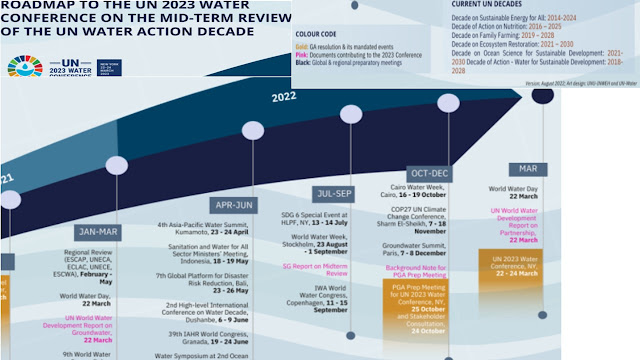
in any event thsi may explain why 2023 is the first time in 20 years that UN HQ Ny is taking another look - tofay can water ai and human netwroks kof water leap ahead
-see filloeing posts feb 2023 as we prep for by and worldwide sdg6 cooperation march 2023
https://www.unwater.org/news/un-2023-water-conference

chris.macrae@yahoo.couk all reportimg errors mine alone - we're here to learn how to umporove the massive open oline cooperations around alumni of fazke abed, yunus or any top 100 worldrecordjobs co-creatir milennaisl find it most useful to ed3dao.com with

Sunday, February 19, 2023
--can un ny march 21 to 25 water summit be first one in 46 years (last 23 of 20th C first 23 of 21sr) to live up to infra entrepreneur James E Carter
UN 2023 Water Conference
https://www.unwater.org › News
Monday, January 30, 2023
REPETITION/ REHEARSAL (humanity & mother earth's herstory - MORAL SENTIMENTS RECURSION 1)
WHY DID 3 PEOPLE START PUBLISHING THE 2025REPORT FUTURE HISTORY GENRE IN 1984
It began in 1980 from a discussion with my father. Having gotten a masters in Statistics from Cambridge DAMPT in 1973 (college corpus christi) my first 7 years of experimenting with computers in education and market research led me to this scenario: one generation of parents and children would need to be responsible for humanity's greatest innovation (and maths : data science) challenge. You can download free all of the following - if you cant find the chapters you want ask me chris.macrae@yahoo.co.uk.
Also, since 2008 we have been playing a game worldrecordjobs with students - whose general knowledge and leading edge practice knowhow do they need to be cooperation alumni of to be the first sustainability generation. For example Steve Jobs launched his version of personal computing with an add lest design opposite to orwell; and he later explained why the last thing youth leaders of joyful (nurturing) communities needed all their brightest brains trapped in : 4 year certificate degrees that also form a nation's largest class of debtors
books, files, television programmes, computer information and telecommunications will merge. We'll have this portable object which is a television screen with first a typewriter, later a voice activator attached. Afterwards it will be minaturised so that your personal access instrument can be carried in your buttonhole, but there will be these cheap terminals around everywhere, more widely than telephones of 1984. The terminals will be used to access databases anywhere in the globe, and will become the brainworker's mobile place of work. Brainworkers, which will increasingly mean all workers, will be able to live in Tahiti if they want to and telecommute daily to the New York or Tokyo or Hamburg office through which they work. In the satellite age costs of transmission will not depend mainly on distance. And knowledge once digitalised can be replicated for use anywhere almost instantly.
Debating this with some scottish diaspora friends (as well as journalists representing worldwide diversity) who had worked in majority of nations and hemispheres we hypothesesed millennials would need to be supported (by the deepest data ever linkedin) with the biggest jobs/livelihood change ever : 1 billion new tech jobs 1 billion green jobs 1 billion community last mile service/building jobs as well as 1 billion old jobs. Thats what the market of jobs needed the elder half of the digital cooperation world map by 2025 as prime time
Father had been doing a survey of von neumanns with economist journalists since 1951 - what goods can peoples unite with 100 time more tech- so this unprecedented innovation challenge fitted with his view that roughly speaking communicationss tech (see ITU 1865) had changed at ever accelerating speed since 1865 ; we could look at what happened to the first two 40 year periods 1945-1905-1865 see 2 world wars that both his and his father's lives as students had been interrupted by (as had most europeans of the generation born circa 1923 and 1890. So if we looked at 1865-2025 as a game of 4 quarters we needed to learn from any mistakes for the first 3 quarters before we passed over most decision making to artificial intel as the only real time mediators of data streaming live from every gps on every human behavior and every natural reaction. Orwell had already written big brothers end game which chatting with vin neumann in 1951 all the greats of maths so as a most likely scenario. No mathematician expected an in between scenario - in designing the worldwide stage milebbials woul be trapped in the wrst of times or freed by the best f times.
While father wrote up the philosophy anthropology and economics of this in ways that adam smithians or keynesains had previously shared; he also asked for a young science fiction writer to tell stories of individuals caught up in change like humanco born to a peruvian village far away from civilisation or a young man who transformed himself from small time crook to the greatest hero of saving humans from cyber risks